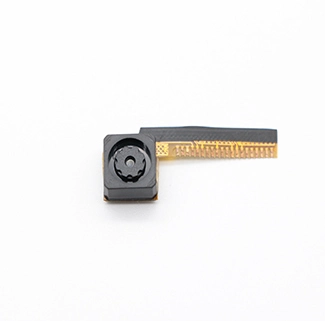
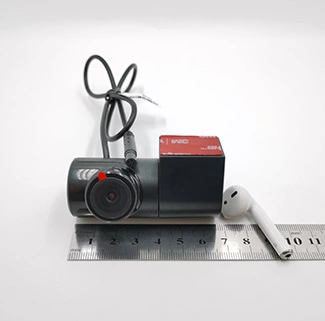
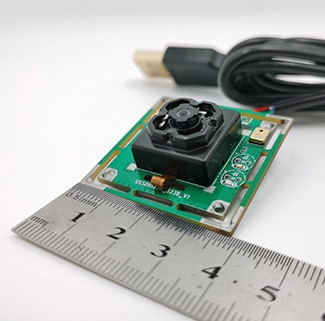
Camera Focus Selection
Choosing between a fixed-focus and autofocus camera module depends primarily on working distance, depth of field, target movement, image-detail requirements and the host system’s ability to control the focusing mechanism. Fixed focus is often suitable for predictable scenes, while autofocus is valuable when subject distance changes during operation.
Neither focus type is automatically better. A correctly configured fixed-focus camera can be more stable and repeatable than an unnecessary autofocus system. An autofocus module can cover a wider range of subject distances, but it adds an actuator, control logic, calibration requirements and additional failure modes.
OEM engineers should select the focus architecture according to measurable application requirements rather than resolution or marketing labels. For resolution-specific considerations, use CK Vision’s 13MP USB camera selection guide.
Choose Fixed Focus When
The target distance is predictable.
The required depth of field can cover the operating range.
Fast, repeatable image capture is important.
The design must minimize moving components.
The enclosure has limited space or power.
Choose Autofocus When
Subject distance changes during operation.
Both close and distant objects must be captured.
Users cannot manually position the target.
The system can support actuator control and AF logic.
Focus time and occasional refocusing are acceptable.
What Is a Fixed-Focus Camera Module?
A fixed-focus camera module uses a lens position that does not automatically change while the camera is operating. The lens is normally positioned during module assembly or calibration so that objects within a defined distance range meet the project’s sharpness requirements.
“Fixed focus” does not mean that every object from zero distance to infinity will be sharp. The usable focus range depends on focal length, aperture, sensor size, pixel size, selected focus distance, acceptable sharpness threshold and mechanical tolerances.
Important distinction: A fixed-focus lens may be adjusted during manufacturing or prototype setup. “Fixed” means that the finished camera does not automatically refocus during normal use.
Main Advantages of Fixed Focus
Fewer moving optical components;
Consistent focus behavior between frames;
No autofocus delay or focus hunting;
Lower control and firmware complexity;
Potentially smaller lens and module structure;
Suitable for controlled working distances and fixed installations.
Main Limitations of Fixed Focus
Cannot automatically compensate for large changes in subject distance;
A close target may fall outside the designed focus range;
Lens position can be affected by assembly variation or mechanical stress;
The focus setting must be selected against the final enclosure and optical window.
What Is an Autofocus Camera Module?
An autofocus camera module changes its focus position according to the target scene. Many compact modules use a voice coil motor or another actuator to move an optical component. The focusing system evaluates image information, commands the actuator and searches for a position that satisfies its sharpness criteria.
Autofocus is a system-level function. The lens actuator alone does not create a complete autofocus solution. The camera may also require an actuator driver, autofocus algorithm, calibration data, firmware, ISP support and a host-side control path.
Capture Image
Read the scene
→
Measure Focus
Calculate sharpness
→
Move Lens
Drive the actuator
→
Confirm Focus
Lock or continue
Main Advantages of Autofocus
Supports changing working distances;
Can capture close and distant targets with one camera configuration;
Reduces dependence on precise user positioning;
Useful for handheld devices and multi-distance object capture;
Can provide software-controlled refocusing when properly integrated.
Main Limitations of Autofocus
Requires time to search and settle at a focus position;
May hunt in low-contrast, reflective or low-light scenes;
Adds moving components and control requirements;
Can increase power, lens height and mechanical complexity;
Must be calibrated and validated with the final host, firmware and enclosure.
Fixed Focus vs Autofocus Camera Module Comparison
| Comparison Item | Fixed Focus | Autofocus |
|---|
| Focus position | Preset during assembly or calibration | Adjusted during operation |
| Best working-distance condition | Predictable or controlled distance | Distance changes between scenes |
| Capture response | No focusing delay after the scene changes | May require search and settling time |
| Moving components | Normally fewer | Actuator or adjustable optical element required |
| Software requirement | Limited focus-control software | AF control, algorithm and calibration may be required |
| Low-contrast scene | Focus position remains unchanged | May focus slowly or hunt |
| Mechanical complexity | Generally lower | Generally higher |
| Typical selection priority | Repeatability and controlled imaging | Flexibility across multiple distances |
How Working Distance and Depth of Field Affect the Choice
Working distance is the distance between the camera and the target. Depth of field is the range of object distances that appear acceptably sharp for a defined optical configuration and acceptance criterion.
Depth of field is influenced by aperture, focal length, object distance, sensor characteristics and the sharpness level required by the application. A system used to detect a large object may accept a wider apparent focus range than a system that must read very small text or inspect fine surface details.
For additional optical background, review the depth-of-field technical resource from Edmund Optics.
Selection principle: If a fixed-focus configuration keeps every required target distance within the project’s acceptable sharpness range, autofocus may add unnecessary complexity. If the required distances cannot be covered reliably by one fixed setting, autofocus should be evaluated.
Higher Resolution Does Not Replace Correct Focus
A high-megapixel sensor cannot recover detail that the optical system fails to resolve. If the target is outside the usable focus range, increasing the sensor resolution may simply produce a larger blurred image.
Resolution, lens quality, focus position, working distance, field of view and target size must be evaluated together. This is especially important for document imaging, barcode recognition, surface inspection and other applications in which small details determine whether an image is usable.
Autofocus Integration: USB vs MIPI Camera Modules
Autofocus responsibilities differ according to the camera interface and module architecture. Confirm which component performs the AF calculation and which component controls the lens actuator.
| Integration Item | USB Camera Module | MIPI Camera Module |
|---|
| Image processing | May occur inside the module’s bridge or ISP | Normally relies more heavily on the host ISP pipeline |
| Actuator control | May be handled by module firmware | May require host driver, VCM driver and platform integration |
| Host control | Standard or customized UVC controls may be exposed | Usually integrated through the camera framework and ISP software |
| Validation priority | UVC control, firmware behavior and application compatibility | Driver, actuator, ISP, algorithm and camera-framework compatibility |
Platform autofocus modes also vary. For example, Android Camera2 defines several AF control modes, but the availability and behavior of those modes depend on the device implementation. See the Android Camera2 autofocus documentation for a platform-specific reference.
Why Autofocus Hunts or Fails
Low scene contrastA plain surface may not provide enough edge detail for the AF metric.
Insufficient lightNoise and long exposure can make reliable focus evaluation more difficult.
Moving targetThe subject may move before the focus search reaches a stable position.
Reflective or transparent surfaceGlare and reflections may direct the algorithm toward the wrong image feature.
Incorrect actuator limitsThe software may not search the correct lens-position range.
Mechanical interferenceThe enclosure or assembly may restrict normal actuator movement.
Which Focus Type Fits Your Application?
| Application Condition | Recommended Direction | Main Validation |
|---|
| Fixed barcode or QR position | Fixed focus may be sufficient | Code size, distance, DOF and decoding rate |
| Document distance varies | Evaluate autofocus | Small text, distortion, focus time and lighting |
| Stationary inspection equipment | Fixed focus is often practical | Repeatability, target height variation and edge sharpness |
| Handheld imaging device | Autofocus may provide more flexibility | AF speed, motion, low light and user behavior |
| Video conference terminal | Depends on expected user distance | Face distance range and refocusing stability |
| Robot viewing objects at several distances | Evaluate autofocus or multiple optical configurations | Target movement, response time and focus repeatability |
How to Validate a Fixed-Focus Camera Module
Define every required target distance: include the nearest, normal and farthest operating positions.
Use representative targets: test actual text, barcode, component or inspection features rather than only a general photograph.
Measure center and corner sharpness: a sharp image center does not confirm acceptable edge performance.
Test production tolerances: evaluate multiple modules instead of approving one unusually good sample.
Install the final enclosure window: additional glass or plastic may affect image quality and focus.
Repeat the test across temperature: optical and mechanical behavior can change with operating conditions.
Record the approved lens position: define assembly, adhesive and inspection requirements for production.
How to Validate an Autofocus Camera Module
Measure focus acquisition time: test from near to far and from far to near.
Test repeatability: run repeated focus cycles and compare the resulting sharpness.
Check focus hunting: include plain, reflective, transparent and low-contrast objects.
Test required illumination levels: autofocus behavior under bright laboratory lighting may not represent the final product.
Evaluate moving scenes: confirm whether the selected AF mode follows the target appropriately.
Test actuator limits: confirm that close and distant focus positions remain within the permitted range.
Validate the final host software: verify initialization, focus triggering, focus status, error recovery and suspend/resume behavior.
Autofocus Is Not the Same as OIS
Autofocus changes the focus position to make a target appear sharp. Optical image stabilization helps compensate for supported camera movement during exposure. The two functions solve different problems.
| Function | Primary Purpose | Does It Refocus? |
|---|
| Fixed focus | Maintain a preset focus range | No |
| Autofocus | Adjust focus for changing subject distance | Yes |
| OIS | Reduce blur from supported camera movement | Not by itself |
For a fixed-focus configuration with optical stabilization, review CK Vision’s 13MP USB camera with OIS. If the application needs autofocus across changing distances, the 4K USB camera module with autofocus provides another architecture for evaluation.
OEM Camera Focus Selection Checklist
Working distanceNearest, normal and farthest target positions.
Required detailSmallest text, barcode, defect or feature to capture.
Field of viewRequired horizontal and vertical coverage.
Scene movementTarget speed, camera movement and capture timing.
Lighting conditionsMinimum illumination, contrast and reflective surfaces.
Host platformUSB or MIPI interface, processor, OS and camera framework.
Mechanical spaceLens height, actuator clearance and enclosure window.
Acceptance criteriaSharpness, focus time, repeatability and failure limits.
Frequently Asked Questions
Is fixed focus or autofocus better for a camera module?
Fixed focus is often better for predictable working distances and repeatable capture. Autofocus is more suitable when subject distance changes and the system must refocus during operation.
Can a fixed-focus camera lens be adjusted?
The lens may be adjusted during assembly or calibration and then secured. It does not automatically change position during normal camera operation.
Why does a camera module keep refocusing?
Focus hunting can be caused by low contrast, insufficient lighting, reflective surfaces, moving targets, unsuitable AF parameters or incorrect actuator limits.
Does a high-resolution camera module require autofocus?
Not necessarily. A high-resolution camera can use fixed focus when the target distance is controlled and the lens provides the required depth of field. Resolution alone does not determine the focus architecture.
Is OIS the same as autofocus?
No. Autofocus changes the focus position according to subject distance. OIS helps compensate for certain types of camera movement. A module may have autofocus, OIS, both functions or neither.
Does every UVC USB camera support autofocus control?
No. Autofocus availability depends on the lens hardware, bridge controller, firmware and exposed UVC controls. The function must be confirmed on the supplied module and tested with the intended operating system.
What information is required for a custom-focus camera sample?
Provide the working-distance range, FOV, target size, required detail, lighting, focus-time requirement, host platform, interface, enclosure drawing, lens-height limit and production quantity.
Conclusion
Fixed focus is a strong choice when the working distance is controlled and the required depth of field can be defined in advance. Autofocus is valuable when the target distance changes, but the actuator, algorithm, firmware and host control must function as one complete system.
The final decision should be based on sharpness tests, focus speed, repeatability, lighting, temperature, enclosure conditions and real target scenes. Prototype testing is required before either focus architecture is approved for production.
Need Help Choosing a Camera Focus Configuration?
Send CK Vision your working distance, target size, FOV, required image detail, focus-speed requirement, host platform and enclosure drawing. Our engineering team can evaluate fixed-focus, autofocus and customized optical configurations for your embedded camera project.
Discuss Your Camera Project
View USB Camera Modules