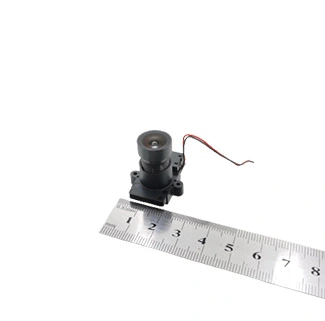
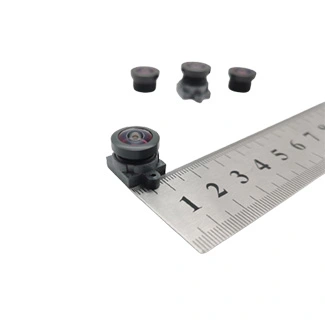
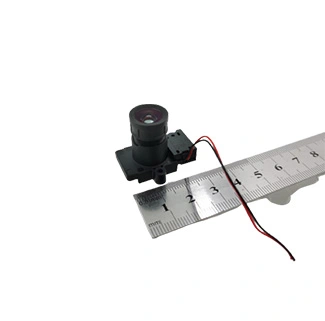
4.5mm M8 Camera Lens for Space-Constrained Camera Designs
CK Vision's 4.5mm M8 camera lens is a compact optical option for embedded camera modules where lens size, installation depth and sensor compatibility are important. Its specified configuration combines a 4.5mm focal length, F/2.0 aperture, 7.8mm total track length (TTL) and five-element plastic optical structure.
For the listed 1/2.7-inch sensor configuration, the lens provides a nominal 65-degree horizontal field of view. Actual performance depends on the selected sensor, focusing distance, lens holder, cover glass and mechanical assembly.
Horizontal FOV
65°
With specified 1/2.7" sensor
The values above describe the published lens configuration. Final optical and mechanical compatibility should be verified using the applicable product drawing and sensor datasheet.
Is This M8 Camera Lens Compatible with Your Image Sensor?
The first question in selecting an M8 lens is not whether its nominal focal length matches the project. It is whether the lens can provide the required field of view, illumination and usable image detail on the actual image sensor.
CK Vision lists the following optical characteristics for this 4.5mm lens. The FOV and distortion values are associated with the specified 1/2.7-inch sensor condition and should not automatically be applied to another sensor size.
| Optical Parameter | Published Value | Engineering Meaning |
|---|
| Sensor Reference | 1/2.7" | Reference format for the listed FOV and distortion values |
| Horizontal FOV | 65° | Horizontal scene coverage under the specified configuration |
| Vertical FOV | 40° | Vertical scene coverage under the specified configuration |
| Diagonal FOV | 73° | Diagonal coverage of the stated lens/sensor combination |
| Image Circle | Ø7.6mm (listed maximum) | Confirm usable sensor coverage and edge image quality |
| Optical Distortion | -3.6% at 1/2.7" | Evaluate suitability for geometry-sensitive applications |
| Relative Illumination | 44% | Assess corner brightness and shading requirements |
| Reference Resolution | 2560 × 1440 (4MP) | Validate center and corner sharpness with the target sensor |
Why Sensor Format Alone Is Not Enough
Two image sensors described by the same optical-format name can still have different active dimensions, pixel configurations or CRA requirements. Before approving the lens, compare the actual active image area with the usable image circle, review sensor-edge illumination and evaluate image sharpness across the field.
Lens-to-Sensor Compatibility Checklist
Sensor Active AreaConfirm the actual active width, height and diagonal rather than relying only on the optical-format label.
Image Circle & Edge QualityEnsure the lens covers the required image area with acceptable brightness and detail.
CRA CompatibilityCheck the chief-ray-angle relationship between the lens and sensor to reduce edge-response problems.
Image Quality ValidationTest the complete camera for corner shading, distortion, focus consistency and usable resolution.
For additional technical background, see Edmund Optics' explanation of image sensor size and lens matching.
How Does the 7.8mm TTL Affect Camera Module Integration?
One of the most relevant specifications of this M8 camera lens is its 7.8mm total track length (TTL). In a miniature embedded camera, lens height and the distance between optical components can determine whether the camera assembly fits inside the available product enclosure.
TTL is not simply the visible external height of a lens barrel. The exact reference points must be interpreted from the applicable optical and mechanical drawing. Lens holder depth, focus position, filter thickness and mounting clearance should be reviewed together.

CK Vision M8 lens engineering drawing. Confirm the applicable drawing revision and mounting dimensions before production.
Total Track Length
The nominal 7.8mm TTL is an important constraint when planning the available depth between the optical assembly and the image plane.
Back Focal Dimensions
The published optical and mechanical back focal dimensions help define sensor, lens holder and optical-filter positioning. Use the drawing's reference surfaces for final design.
Lens Holder Fit
Confirm the exact M8 thread pitch, mating holder dimensions, thread engagement and focus-adjustment range before assembly.
Mechanical Details to Confirm Before Production
| Design Item | What Engineers Should Verify |
|---|
| Threaded Mount | Exact thread pitch, holder tolerance and thread engagement |
| TTL & Tolerance | Total optical stack dimensions and latest approved drawing revision |
| Filter Stack | IR filter, cover glass and their influence on final focus position |
| Enclosure Clearance | Lens outside diameter, housing opening and available Z-height |
| Focus Adjustment | Final focus position, mechanical travel and assembly locking method |
Engineering Note:The nominal M8 thread diameter does not by itself confirm the thread pitch. Use the latest approved lens drawing and matching holder specification before tooling or mass-production approval.
What Does the 4.5mm Focal Length Mean in Practice?
The focal length of a camera lens helps determine the angular coverage and scale of objects in the image. On the same sensor, a shorter focal length normally captures a wider scene, while a longer focal length captures a narrower scene with greater image magnification.
For this CK Vision M8 lens, the published field of view is based on a specific 1/2.7-inch image sensor. It should be treated as a reference condition rather than a fixed angle for every camera module using the lens.
Horizontal Field of View
65°
Vertical Field of View
40°
Diagonal Field of View
73°
These angles give a useful starting point for deciding whether the camera can cover the intended subject. However, the final visible scene also depends on the actual working distance, active sensor dimensions, cropping, distortion and focus setting.
Three Questions Before Selecting This 4.5mm Lens
1. How Large Is the Target?Define the subject width and height that must remain visible at the actual installation distance.
2. How Far Is the Camera?Check the working distance and required focus range. The published minimum object distance must be confirmed for close-range projects.
3. Which Sensor Is Used?The lens may produce a different FOV or image coverage when the active sensor dimensions change.
Important for Close-Range Camera DesignsThe current published specification lists a minimum object distance of 2m. If your product requires face capture, barcode reading or other close-range imaging, confirm the actual focus capability and available adjustment range before selecting this lens.
Where Can This Compact M8 Camera Lens Be Used?
A compact M8 lens can be considered in applications where lens dimensions and enclosure depth are important design constraints. However, physical size alone does not establish application compatibility. The camera must also meet requirements for focus distance, FOV, image detail, illumination and environmental performance.
| Potential Application | Why an M8 Lens May Be Considered | Critical Validation |
|---|
| Compact Security Camera | Small lens form factor and a defined reference FOV | Scene coverage, illumination, focus and enclosure clearance |
| Driver Monitoring System | Potential fit for compact automotive camera packaging | Actual driver distance, IR response, focus and automotive qualification |
| Access Control Camera | Small optical envelope for integrated terminals | Near-field focus, facial framing and lighting conditions |
| Embedded IoT Camera | Compact integration where board space and lens height are limited | Sensor compatibility, holder, mechanical envelope and image quality |
| Miniature Industrial Imaging | Potential use when a compact optical assembly is required | Working distance, distortion, MTF and target feature size |
Application Suitability Must Be VerifiedDMS, access control and other short-distance imaging systems require special attention to the actual minimum focusing distance. The application categories above represent potential design directions, not a claim that every configuration has been validated with this specific lens.
For projects requiring a complete miniature camera assembly rather than an individual lens, explore CK Vision's compact USB camera module or browse the broader camera lens range.
M8 vs M12 Camera Lens: Which Fits a Smaller Camera Module?
M8 and M12 lenses are both used in compact camera designs, but they do not have interchangeable mounting dimensions. The best option depends on the available enclosure space, required optical performance and the mechanical structure of the camera module.
| Selection Factor | M8 Camera Lens | M12 Camera Lens |
|---|
| Nominal Thread Diameter | 8mm | 12mm |
| General Design Direction | Space-constrained camera assemblies | A broader range of available optical designs |
| Mechanical Fit | Confirm M8 pitch, holder, TTL and focus position | Confirm M12 holder, lens diameter, TTL and enclosure depth |
| Optical Coverage | Depends on the specific lens image circle and optical design | Depends on the specific lens image circle and optical design |
| Best Selection Basis | Use when the selected M8 design meets optical and mechanical requirements | Use when the selected M12 design offers the required optics and physical clearance |
When to Evaluate M8
Consider M8 when the enclosure has limited optical space and a compatible M8 lens can meet the required image circle, field of view, focus range and image quality.
When to Evaluate M12
Consider M12 when the camera enclosure allows additional lens space or when the project requires an optical configuration better served by a specific M12 design.
For a detailed explanation of focal length, sensor size, field of view, distortion and mechanical lens selection, see CK Vision's M12 Lens Selection Guide.
M8 Camera Lens FAQs
What sensor sizes are compatible with this M8 lens?
The published FOV and optical distortion values are referenced to a 1/2.7-inch sensor configuration. Compatibility with another sensor requires checking the active sensor dimensions, usable image circle, CRA, relative illumination and image quality on the final assembly.
What is the TTL of this M8 camera lens?
The nominal total track length is 7.8mm. For product integration, check the final approved optical drawing, dimensional tolerance, filter stack, holder structure and available enclosure depth.
Can this M8 lens be used for close-range imaging?
Close-range suitability cannot be determined from the lens diameter or focal length alone. The current specification lists a 2m minimum object distance, so projects requiring shorter distances should verify the actual focus capability with CK Vision before selection.
Is an M8 lens interchangeable with an M12 lens?
No, they should not be treated as direct mechanical replacements. M8 and M12 lenses use different nominal threaded diameters and require suitable lens holders. Optical coverage, focal length, focus position and mechanical dimensions must also be revalidated.
Does the 4MP resolution specification guarantee image quality?
No. The published 2560 × 1440 resolution is a reference specification, not a substitute for system-level optical testing. The actual image detail depends on sensor pixel size, focus position, lens MTF, illumination and image processing. Center and corner performance should both be checked.
What information is needed for OEM M8 lens integration?
Provide the image sensor model, active sensor dimensions, required FOV, working distance, image-quality requirements, lens holder drawing, available TTL and enclosure space, operating environment and expected production quantity. This helps determine whether the existing lens configuration can be used in the final camera assembly.
Request an M8 Lens Compatibility Evaluation
Selecting the right M8 camera lens requires more than matching focal length and sensor format. CK Vision can review your sensor model, image requirements and mechanical constraints to evaluate the suitability of this 4.5mm M8 lens for your camera module.
Sensor ModelRequired FOVWorking DistanceLens Holder DrawingMechanical LimitsProject Quantity
Discuss Your M8 Camera Lens RequirementsPlease share your technical requirements and the intended camera application for engineering review.