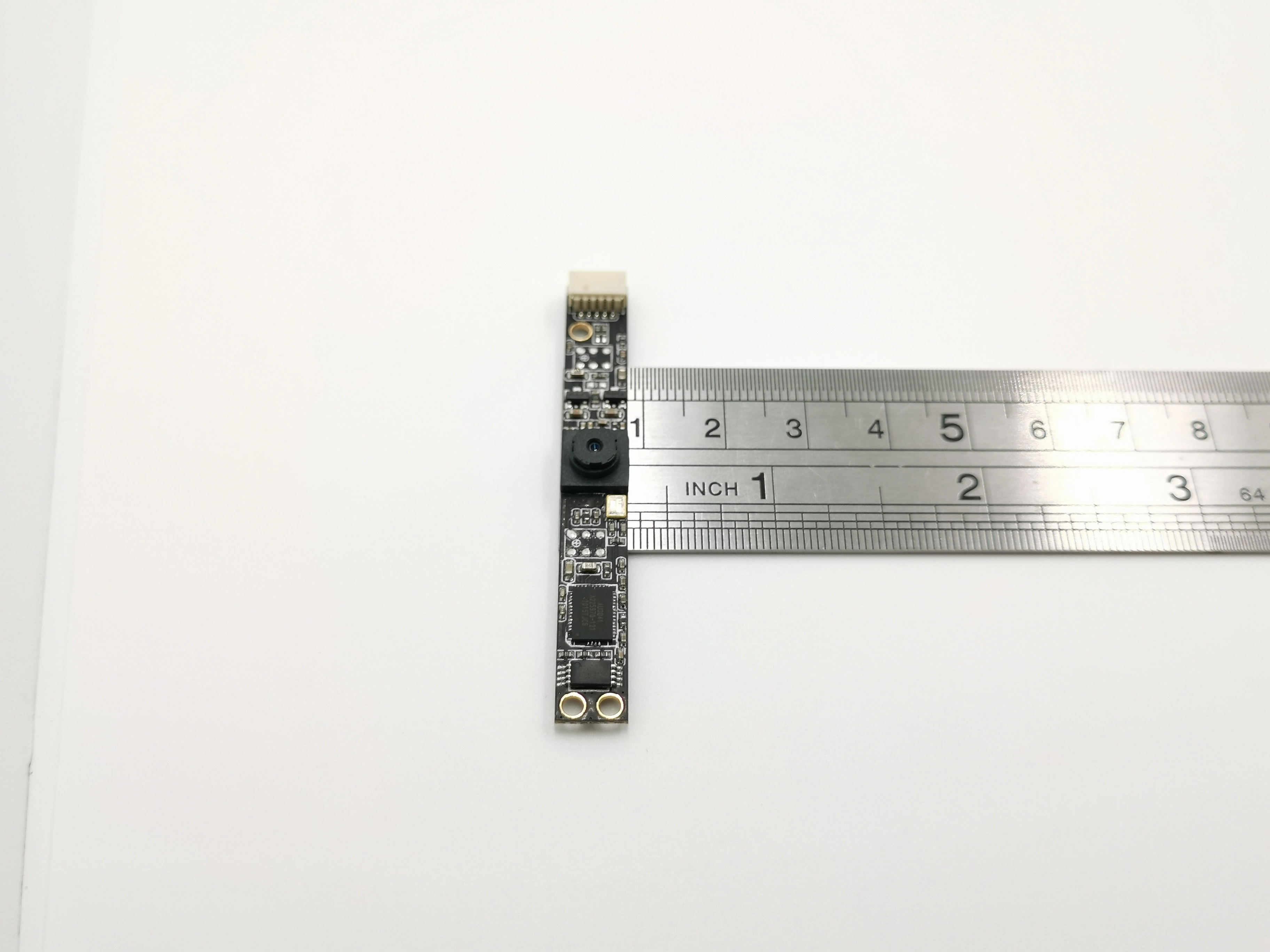
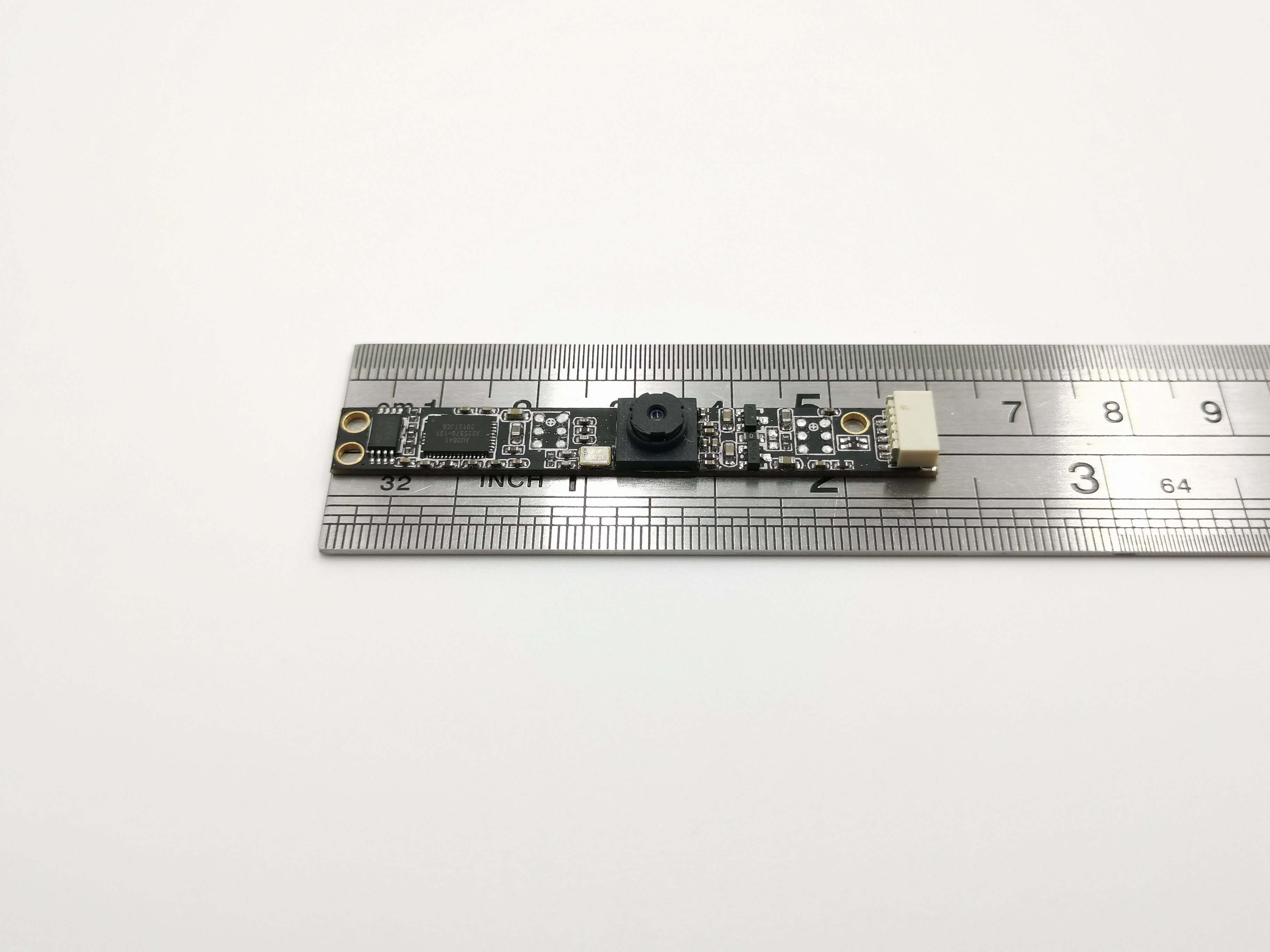
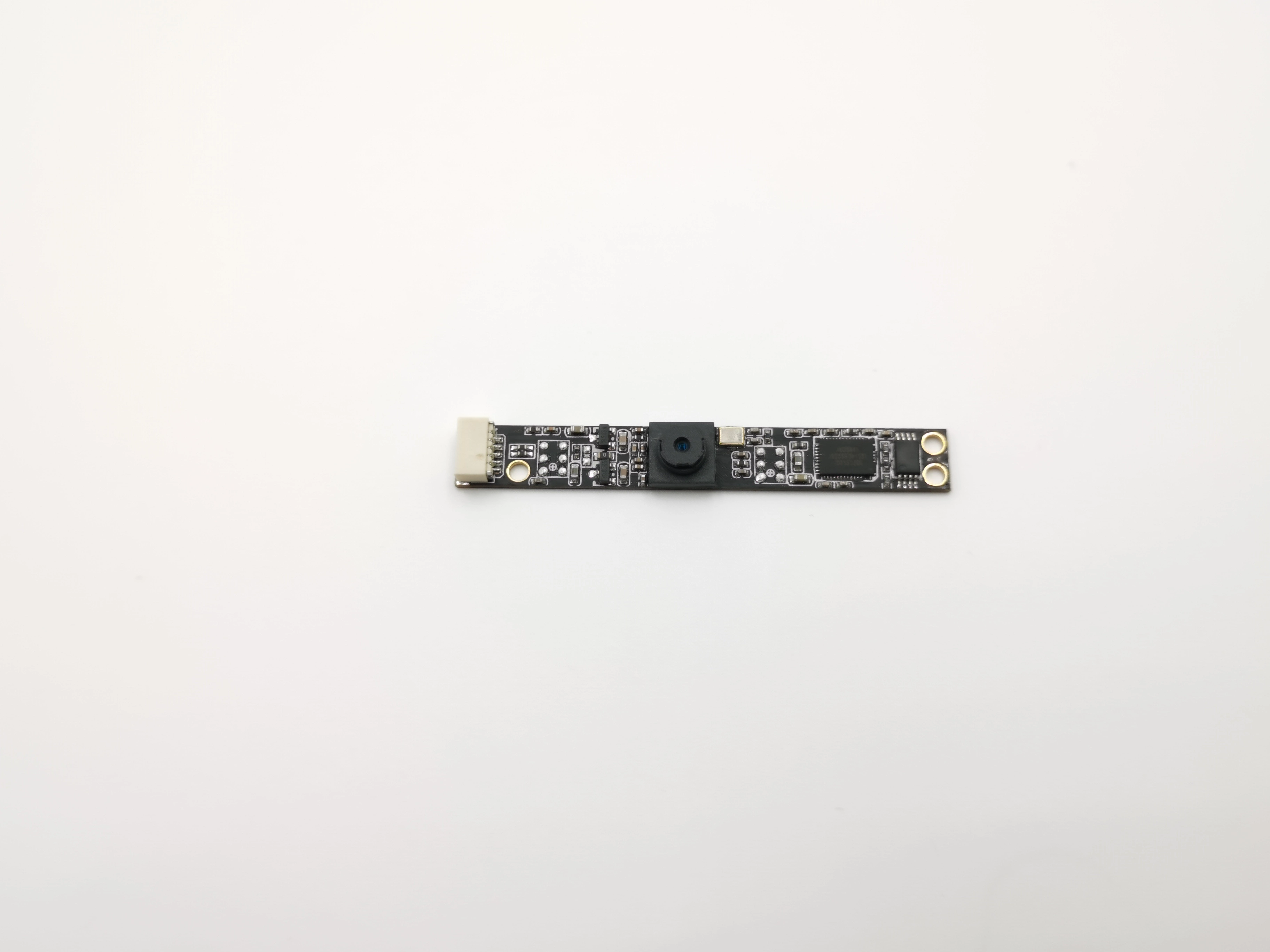
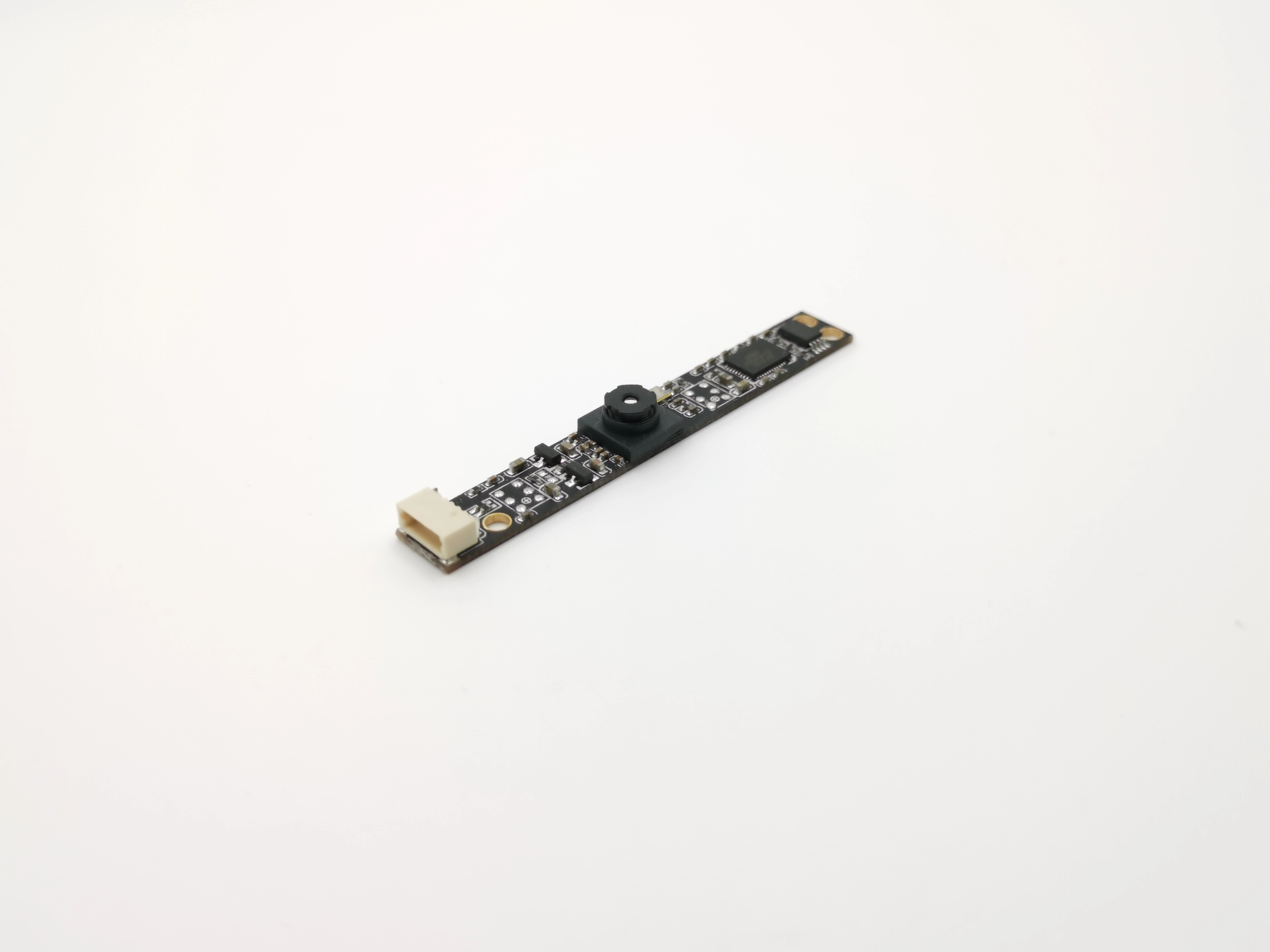
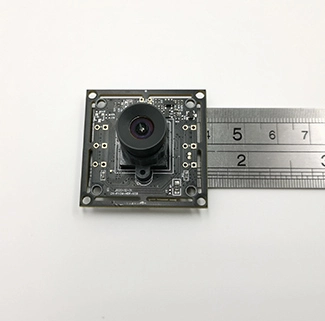
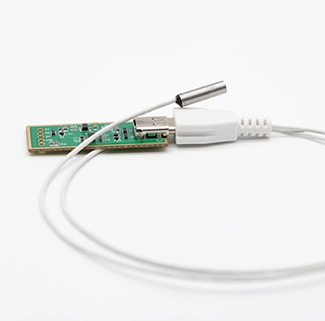
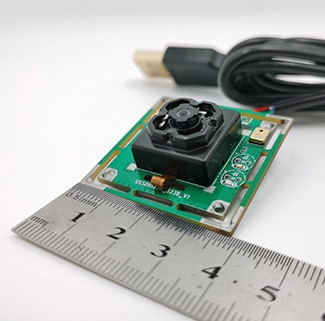
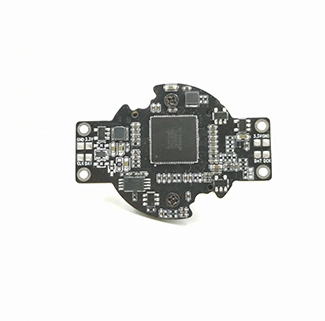
Performance Parameter of High Resolution 5MP USB Camera Module
Model | CK-USB5M-V2.0 | REMARKS |
Image Sensor | OV5648 |
|
Image Sensor Size | 1/4 |
|
Effective Pixels | 2592*1944 |
|
Pixel size | 1.4μm x 1.4μm |
|
Camera Data output | MJPEG / YUV2(YUYV) |
|
Maximum Frame Rates and Resolution | 2592 x 1944 @ 30fps MJPEG |
|
SNR max | 34dB |
|
Dynamic range | 67dB HDR mode |
|
Min. Illumination | ≥0.1LUX at F.No2.6 | NO LED |
Interface | USB2.0 |
|
Power requirements | USB 5V |
|
Storage temperature | -40℃ to 90℃ |
|
operating temperature | -30℃ to 70℃ |
|
Power Consumption | 400mW |
|
LED IR-850 | NO, but could be customized |
|
OS | Win XP/Vista/Win7/Win8 / Linux with UVC(above linux-2.6.26) MAC-OS X 10.4.8 or later/Android 4.0 or above with UVC |
|
Lens size | M6 diameter;2.9mm TTL |
|
Lens Construction | 5P+IR |
|
F/NO | 2.6 |
|
EFL | 2.1mm |
|
FOV | D=86° H=70° V=55° |
|
Optical distortion | ≤-0.6% |
|
Shooting distance | Fixed Focus, 10cm-infinity |
|
Looking for a Turnkey Embedded Camera Module Manufacturer?
Beyond supplying Grade-A hardware, CK Vision stands out by offering professional, in-house ISP tuning services to eliminate image noise, adjust color matrices, and calibrate Auto-White-Balance (AWB) according to your unique application housing. Whether you need a custom-shaped rigid PCB, a flexible FPC layout for slim medical endoscopes, or an upgraded high-speed architecture, we have a massive mass production capacity of 100k units per month. Please Contact CK Vision Now to discuss your project parameters, request a custom 3D CAD model, or receive an immediate wholesale quotation.
Hardware Engineering Guide: OV5648 vs. OV5640 5MP Camera Modules
OV5648 vs OV5640 for 5MP USB Camera Modules
| Comparison | OV5648 | OV5640 |
| Sensor Type | 5MP RAW image sensor | 5MP system-on-chip sensor |
| Optical Format | 1/4 inch | 1/4 inch |
| Pixel Size | 1.4 μm | 1.4 μm |
| Native Processing | Requires external ISP/bridge processing | Integrated ISP and JPEG processing |
| Autofocus Control | Depends on external design | Integrated AF control support |
| Native Interface | Two-lane MIPI RAW | MIPI and DVP |
| Module Design | Suitable for compact custom architectures | Suitable for designs requiring more integrated processing |
| USB Integration | Requires USB bridge, ISP and firmware | Also requires USB bridge for USB output |
| Best For | Thin modules, custom firmware and external image processing | Projects that benefit from integrated sensor processing |
| Final Selection | Based on bridge, firmware, size, power and image requirements | Based on integration complexity and required functions |
OV5648 is primarily a RAW image sensor that works with an external ISP or USB bridge, while OV5640 integrates more image-processing functions inside the sensor. The best choice depends on PCB size, firmware architecture, autofocus requirements, power consumption and image-quality targets. Read our detailed OV5648 vs OV5640 comparison for integration guidance.
Does an OV5648 USB Camera Module Need a Driver?
A UVC-compliant OV5648 USB camera module normally appears to Windows, Linux, macOS or Android as a standard USB video device. In this configuration, a separate host-side ov5648 driver is generally unnecessary because the host system uses its standard UVC driver rather than communicating directly with the OV5648 sensor. The camera module’s internal bridge chip and firmware control the OV5648 sensor and convert its image data into USB video.
| Product Type | Driver Requirement |
| OV5648 USB UVC camera module | Usually uses the host system’s UVC driver |
| OV5648 MIPI camera module | Requires sensor driver and platform integration |
| Custom USB firmware | May require application or SDK support |
| Android USB camera | Requires host UVC/OTG support and application validation |
| Linux USB camera | Usually accessed through UVC/V4L2 |
| Raw MIPI OV5648 sensor | Requires kernel driver, device tree and ISP integration |
This OV5648 USB camera module normally uses the standard UVC driver provided by the host operating system. A separate OV5648 sensor driver is generally required only when the sensor is used as a raw MIPI camera rather than as a complete USB UVC camera. Read the OV5648 USB camera driver guide for Linux, Android and MIPI integration details.
When Should You Choose a 5MP USB Camera?
For buyers evaluating a usb camera 5mp solution, the correct camera resolution depends on how much image detail the application needs, how fast the target moves, the available USB bandwidth, the host processing capability and the installation space. Use the table below as a starting point for camera selection.
| Application Requirement | Recommended Resolution | Selection Guidance |
| Basic monitoring and navigation | 0.3MP or 2MP. For products with very limited installation space, consider a small USB camera module. | Lower-resolution modules can reduce bandwidth, power and enclosure requirements when fine image detail is not necessary. |
| Video calls and general embedded imaging | 2MP / 1080p | Full HD usually provides a practical balance between image clarity, bandwidth, host processing and project cost. |
| Document, label and surface-detail capture | 5MP | A 5MP camera provides more pixels for text, labels, identification cards and surface-detail inspection than a standard 1080p module. |
| Digital cropping and higher-detail inspection | 5MP or 4K USB camera module | Choose 4K when the project requires more pixels for image cropping, small-feature recognition or high-detail visual inspection. |
| Compact low-power device | 0.3MP or a low-power 5MP configuration | Resolution should be balanced with module dimensions, USB bandwidth, heat generation and available host power. |
| High-detail AI vision | 5MP or 4K | Higher-resolution input may improve object classification, label recognition and defect analysis, but only when the AI platform can process the additional data. |
| High-speed moving objects | Select by frame rate and shutter performance. A USB 3.0 camera module may be more suitable when higher data throughput is required. | Resolution alone does not prevent motion blur. Exposure time, frame rate, lighting, shutter type and USB bandwidth must be evaluated together. |
5MP is not automatically the fastest or best option.
A 5MP camera may provide more detail than a 2MP module, but it can also require more bandwidth and host processing. A 4K camera provides even more pixels, but may be unnecessary for compact or low-power systems. The final choice should be based on target detail, frame rate, shutter performance, USB bandwidth, processing capacity and installation space.
Send CK Vision your target object size, working distance, required frame rate, host system, cable length and available installation space for a camera configuration recommendation.
OEM and ODM Customization Options
| Custom Item | Available Options |
| PCB/FPC | Board shape, width, length, mounting holes and component position |
| Lens | FOV, focal length, distortion, aperture and working distance |
| Focus | Fixed focus, close focus or autofocus subject to architecture |
| Interface | USB connector type, cable length and cable direction |
| Firmware | Resolution, frame rate, image format and UVC controls |
| Image Quality | Exposure, AWB, color, sharpness and noise reduction |
| Functions | IR LED, GPIO, trigger, microphone or other functions after evaluation |
| Documentation | Datasheet, drawings, sample confirmation and integration support |
Send us your enclosure drawing, target object size, working distance, field of view, operating system, required resolution and estimated annual quantity. Our engineering team will evaluate the optical, mechanical and firmware configuration before recommending a sample.