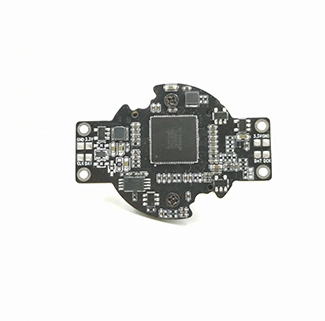
Amidst the realm of visual enchantment, the finesse of ISP tuning within Ingenic Semiconductor platforms like JZ4730, JZ4780, X1000E, and more, emerges as the catalyst that transforms mere pixels into captivating visual narratives. This article delves into the nuanced world of ISP tuning, illuminating its significance, methodologies, and the exceptional prowess of our ISP tuning FAE team.
Ingenic Semiconductor Platforms: Unveiling Visual Tales
From the JZ4730 to the T31C, each Ingenic Semiconductor platform becomes a canvas for the artistry of image signal processor (ISP) tuning. Our technical experts, armed with the IQ tuning tool, embark on a meticulous journey of calibration. They sculpt exposure dynamics, refine color subtleties, and harmonize dynamic ranges, conjuring visuals that resonate with authenticity and emotion.
The ISP Tuning FAE Team: Architects of Excellence
The ISP tuning FAE (Field Application Engineer) team stands as the driving force behind our ISP tuning achievements. Guided by their profound understanding of Ingenic Semiconductor platforms, they navigate the intricate maze of parameters and algorithms with precision. Their technical mastery gives birth to visuals that stand as testaments to their artistry.
Triumphs in Innovation: A Legacy of Success
Triumphant projects spanning low power cameras, industrial cameras, robots, and AI camera ventures bear witness to the capabilities of ck vision's ISP tuning FAE team. Each project stands as a living testament to their ability to breathe life into pixels, transcending boundaries and reshaping the realm of visual possibilities. Customers comparing different processor platforms can review CK Vision’s complete ISP tuning services, including camera IQ optimization, sensor integration, camera debugging and platform-specific image calibration.
Pioneering Visual Frontiers: Crafting Tomorrow's Narratives
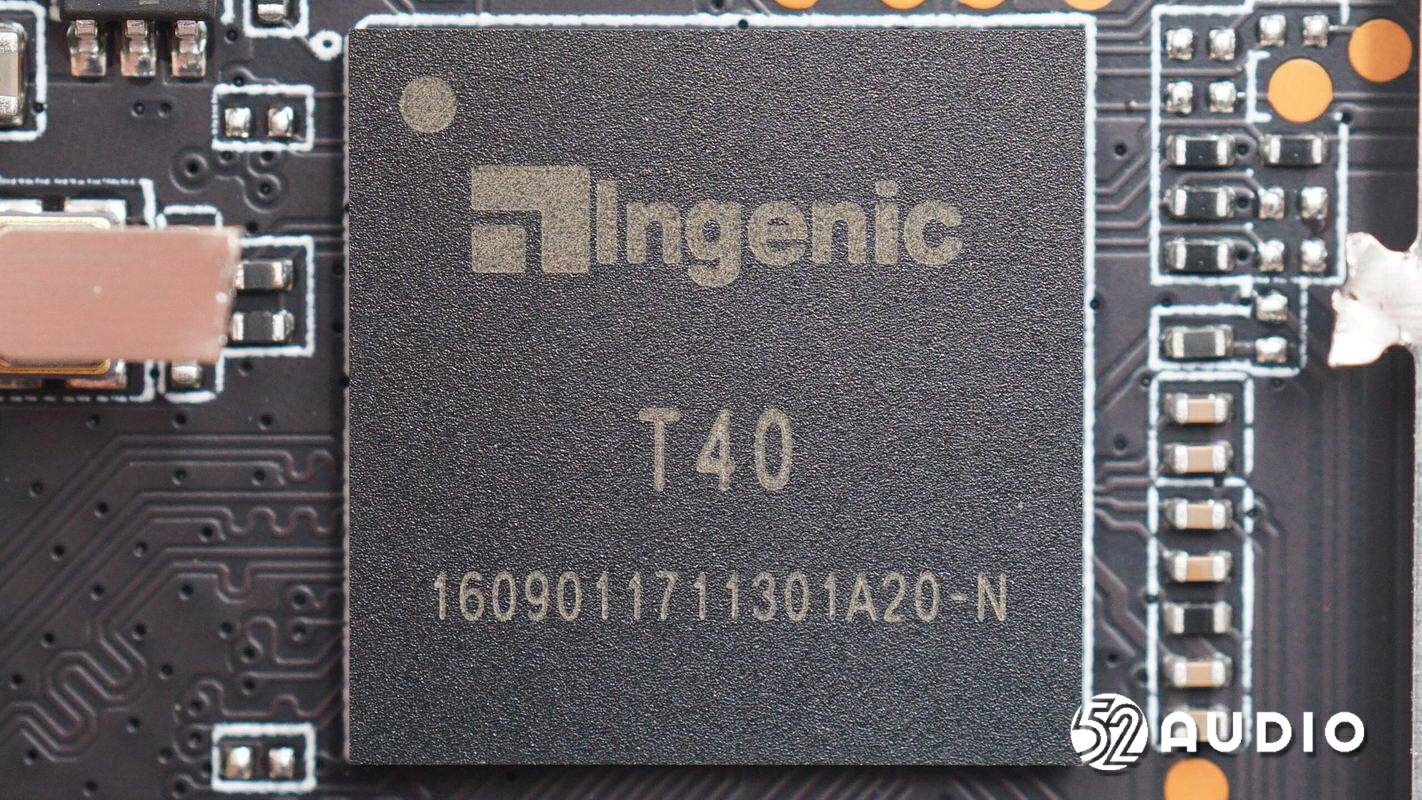
ISP tuning within Ingenic Semiconductor platforms is not just calibration—it's a narrative crafted with pixels. From the X1830A to the T40, each platform variant becomes an arena where our technical experts orchestrate visual symphonies. As technology propels us into new realms, ISP tuning remains a guiding light, leading the way to a future where every frame echoes the excellence of our ISP tuning FAE team.
Supported Ingenic Platforms and Camera Project Scope
| Platform | Official Camera/ISP Characteristics | Typical Tuning Focus | CK Vision Support |
| Ingenic T31 / T31C | Low-light-oriented video ISP | AE/AWB convergence, 2D/3D NR, WDR/DRC, sharpening | Supported / Confirm |
| Ingenic T40 | 4K, multi-sensor and advanced ISP functions | 4K tuning, HDR, RGB-IR, LDC, multi-camera consistency | Supported / Confirm |
| Ingenic X2000 / X2000E | Dual camera interfaces and dual ISP capability | Dual-camera synchronization, AE/AWB consistency, color matching | Supported / Confirm |
| Other T-series | Depends on SDK and ISP generation | Platform-specific evaluation | Evaluation Required |
| Legacy JZ/X platforms | Older SDK and interface environment | Maintenance, sensor replacement or migration | Evaluation Required |
Common Ingenic Camera Image Quality Problems We Solve
| Problem | Possible Cause | Tuning Direction |
| Image is noisy at night | High gain and weak NR balance | 2D/3D NR and exposure optimization |
| Moving objects leave trails | Excessive temporal NR | Motion-aware NR adjustment |
| Indoor image looks yellow | AWB calibration issue | AWB statistics and color temperature tuning |
| Bright window is overexposed | Limited AE/WDR settings | AE target and WDR/DRC tuning |
| Corners are darker | Lens shading | LSC calibration |
| Image is too soft | Weak sharpening or lens mismatch | Lens verification and sharpening |
| Purple edges appear | Lens and color-processing issue | Chromatic correction and ISP adjustment |
| Dual cameras look different | Independent sensor/lens variation | Cross-camera color and exposure matching |
In conclusion, ISP tuning within Ingenic Semiconductor platforms is an ode to technical precision and artistic brilliance. The platforms, from the JZ4770 to the T31C, transform into stages where our technical experts paint visual tales that captivate the senses. As we journey forward, ISP tuning becomes an anthem of excellence, shaping visual narratives that resonate in low power cameras, industrial cameras, robots, and AI camera projects.
Ingenic ISP Tuning FAQs
Which Ingenic platforms does CK Vision support for ISP tuning?
CK Vision can evaluate ISP tuning projects for Ingenic T-series, X-series and other supported camera platforms. Common project requirements may involve T31, T31C, T40 and other Ingenic processors used in smart cameras, low-power imaging devices and embedded vision systems.
Final support depends on the exact processor model, SDK or BSP version, image sensor, interface, resolution and required ISP functions. Customers should submit their platform information for technical confirmation before starting a project.
Does CK Vision provide Ingenic T31 ISP tuning?
Yes. CK Vision can evaluate Ingenic T31 and T31C camera projects involving sensor bring-up, exposure, white balance, color correction, lens shading, noise reduction, sharpening and wide-dynamic-range optimization.
T31 projects often require careful balancing between low-light sensitivity, temporal noise reduction and moving-object detail. The available tuning scope depends on the SDK version, selected sensor, lens, illumination and required output mode.
Can you provide both camera sensor drivers and Ingenic ISP tuning?
Yes. Sensor driver development and ISP tuning can be provided as separate or combined services.
The sensor driver is responsible for sensor initialization, power sequencing, register configuration, MIPI or DVP communication and stable image streaming. ISP tuning begins after valid image data is available and focuses on exposure, white balance, color, noise, sharpness, dynamic range and lens-related correction.
If the camera cannot produce a stable RAW or processed image, driver and hardware issues should be resolved before image-quality tuning begins.
What image-quality parameters can be tuned on an Ingenic platform?
The tuning scope may include black-level correction, defective-pixel correction, lens-shading correction, automatic exposure, automatic white balance, autofocus, color correction, gamma, saturation, contrast, sharpening, 2D and 3D noise reduction, WDR or HDR, distortion correction and day/night image optimization.
Available parameters vary by Ingenic processor, ISP generation, SDK, sensor mode and camera architecture. CK Vision confirms the applicable tuning modules after reviewing the customer’s platform and project requirements.
Can you improve low-light image quality and reduce night-time noise?
Yes. Low-light optimization can include exposure strategy, analog and digital gain control, black-level calibration, 2D and 3D noise reduction, sharpening balance, color retention and day/night switching.
Noise reduction must be adjusted carefully. Excessive temporal noise reduction can create motion trails or remove small details, while insufficient noise reduction can leave visible grain. Testing should therefore include both static scenes and moving objects under the customer’s actual illumination conditions.
Can you tune WDR, HDR and backlight performance?
WDR, HDR or dynamic-range optimization can be evaluated when the selected Ingenic processor, sensor mode and SDK support the required functions.
The tuning process may involve exposure control, multi-exposure behavior, highlight compression, shadow lifting, tone mapping, color consistency and noise management. Typical test scenes include bright windows, vehicle lights, entrances, indoor–outdoor transitions and other high-contrast environments.
The final performance depends on both the sensor’s capture capability and the ISP processing pipeline.