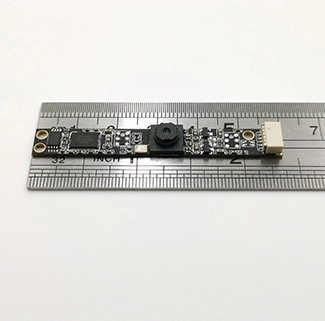
Performance Parameter of Small USB Camera
Model | CK-EDP-0.3 -V2.0 | REMARKS |
Image Sensor | GC030A |
|
Image Sensor Size | 1/10 |
|
Effective Pixels | 640*480 |
|
Pixel size | 2.25μm x 2.25μm |
|
Camera Data output | MJPEG / YUV2(YUYV) |
|
Maximum Frame Rates and Resolution | 640x480 @ 30fps MJPEG |
|
SNR max | 40dB |
|
Dynamic range | 68dB HDR mode |
|
Min. Illumination | ≥0.1LUX at F.No2.6 | NO LED |
Interface | USB2.0 |
|
Power requirements | USB 5V |
|
Storage temperature | -30℃ to 95℃ |
|
operating temperature | -20℃ to 70℃ |
|
Power Consumption | 300mW |
|
LED IR-850 | NO, but could be customized |
|
OS | Win XP/Vista/Win7/Win8 / Linux with UVC(above linux-2.6.26) MAC-OS X 10.4.8 or later/Android 4.0 or above with UVC |
|
Lens size | M4 diameter;2.9mm TTL |
|
Lens Construction | 3P+IR |
|
F/NO | 2.8 |
|
EFL | 0.744mm |
|
FOV | D=105.6° H=117° V=65.6° |
|
Optical distortion | ≤-16.6% |
|
Shooting distance | Fixed Focus, 10cm-infinity |
|
How Small Is This USB Camera Module?
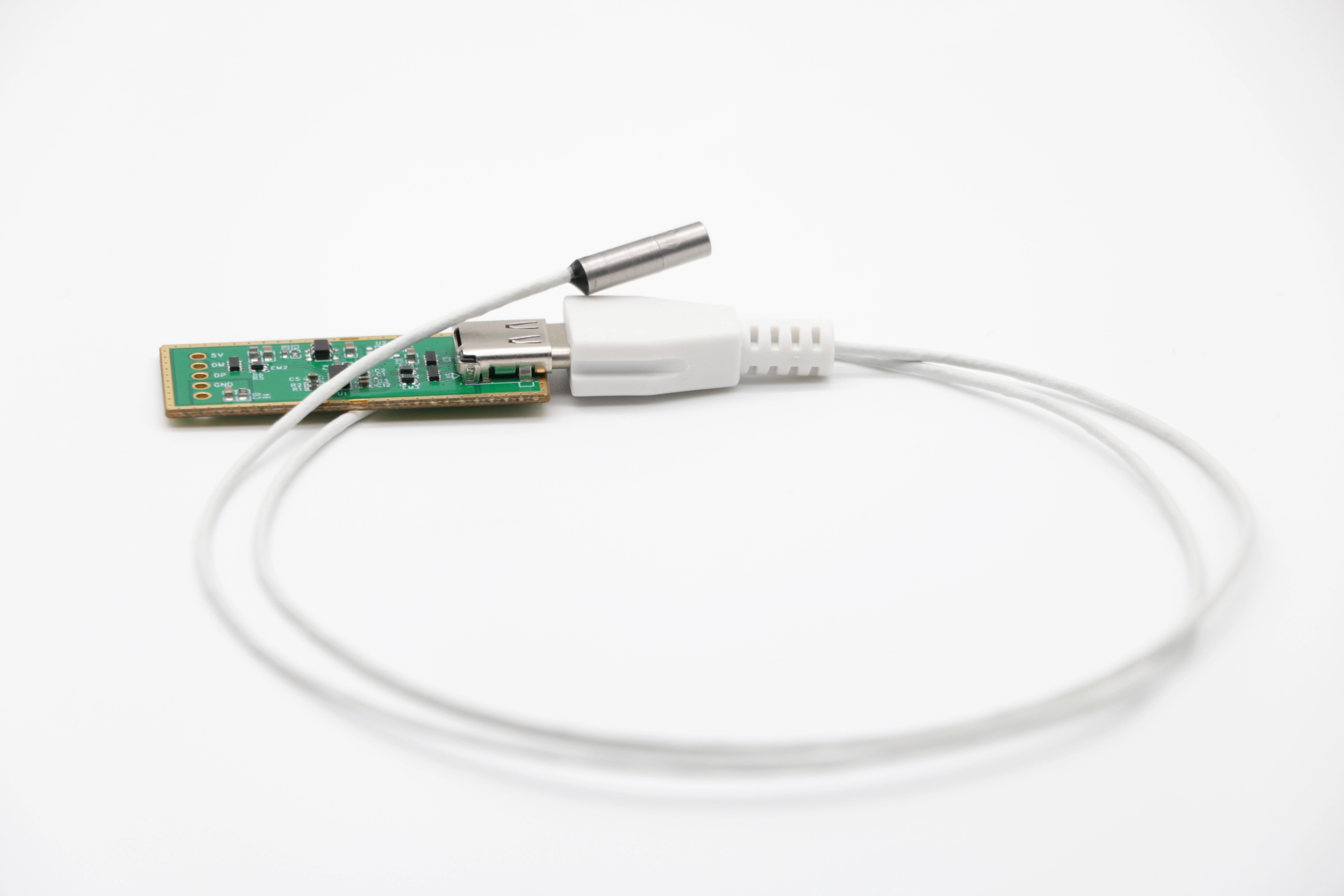
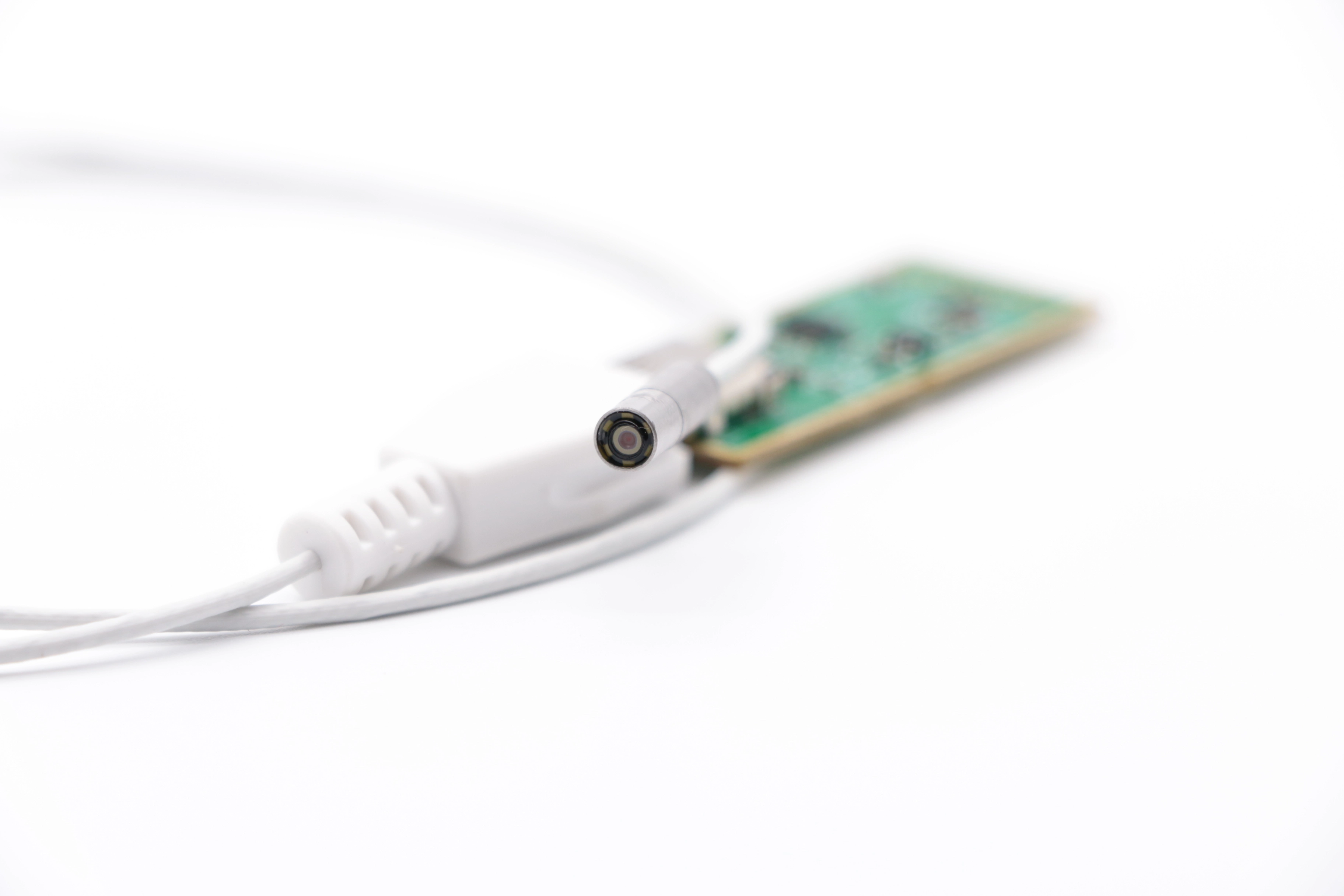
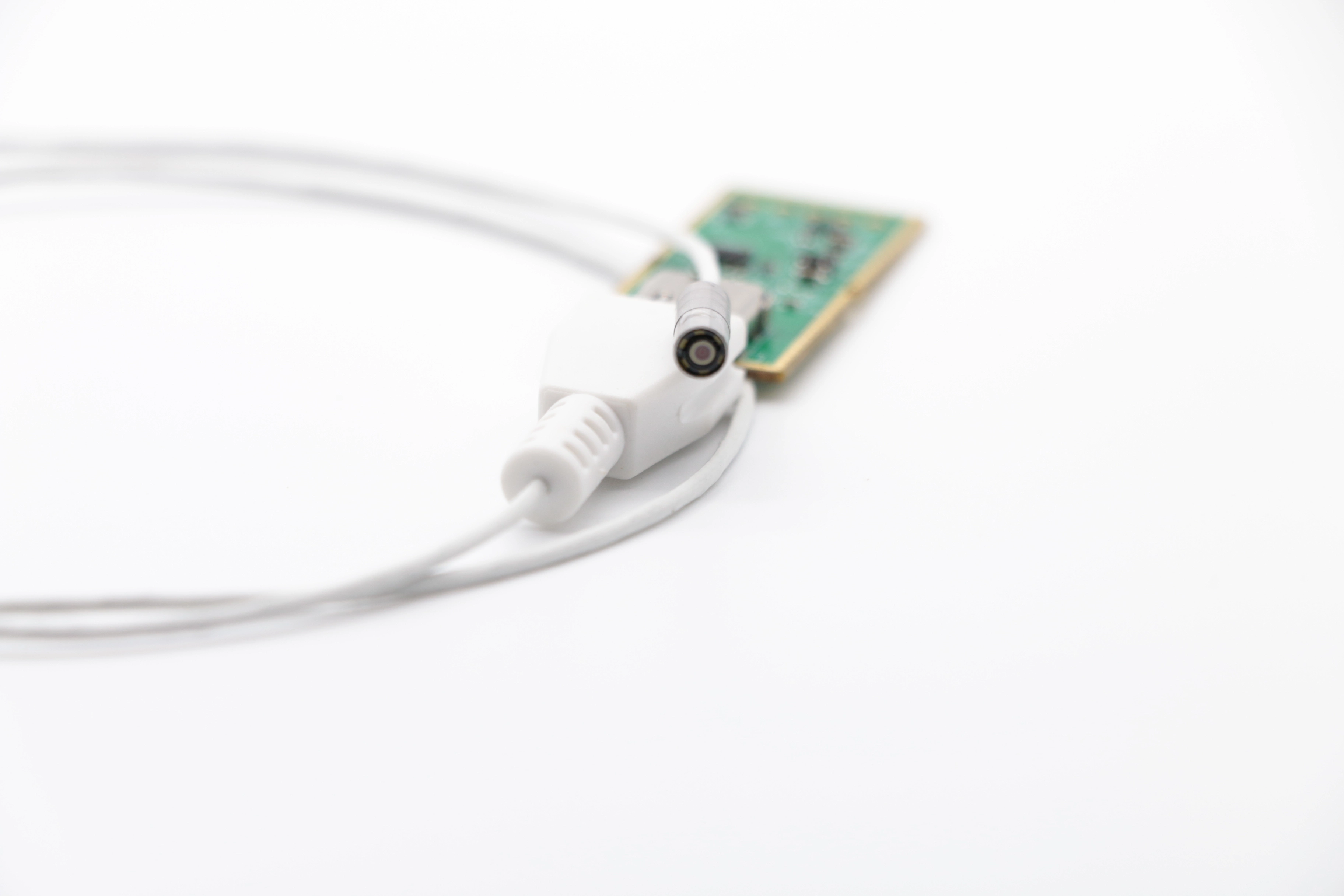
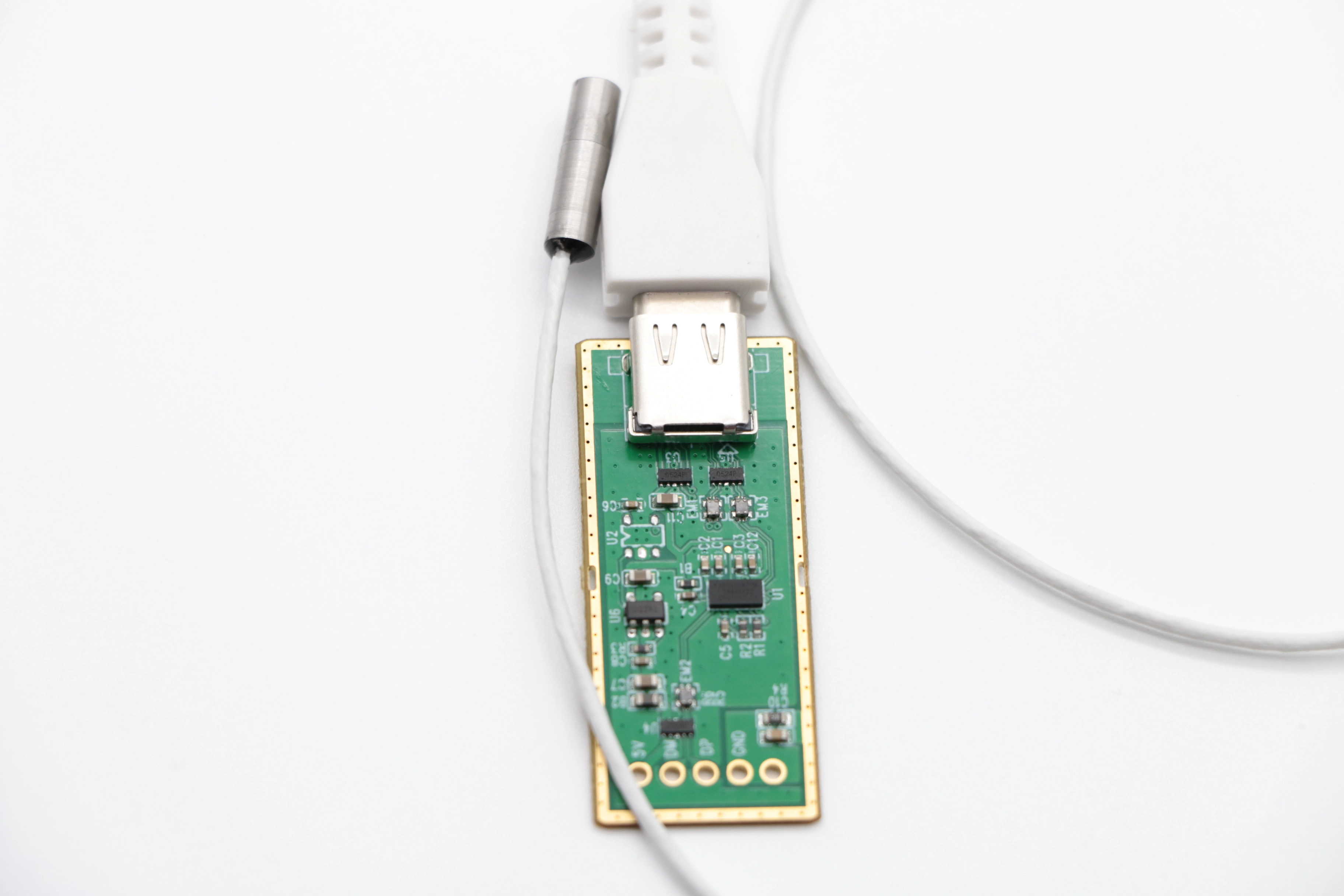
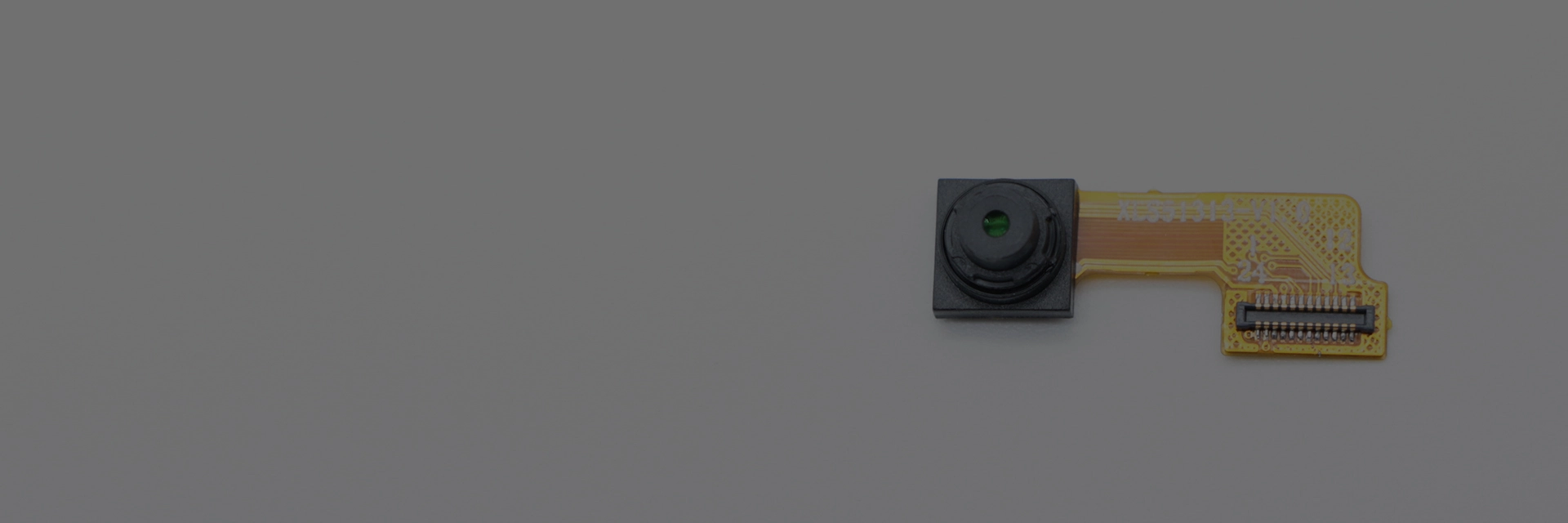
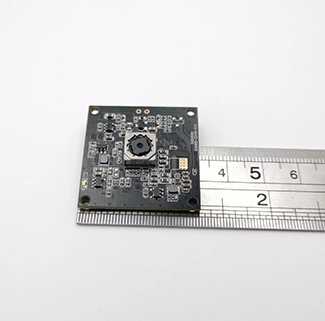
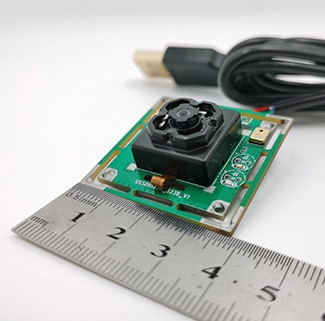
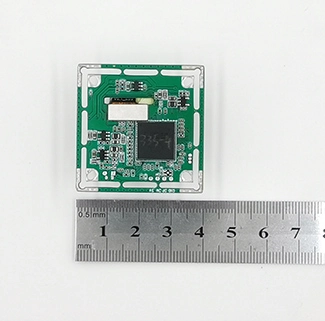
The CK-EDP-0.3-V2.0 is a compact USB camera module designed for devices with limited installation space. It uses an M4 mini lens with a 2.9 mm lens TTL and supports customized PCB/FPC shapes, cable lengths and connectors for endoscopes, inspection equipment, robotics and embedded IoT devices.
Mechanical Dimensions
| Item | Specification |
| Product Model | CK-EDP-0.3-V2.0 |
| Lens Diameter | M4 |
| Lens TTL | 2.9 mm |
| Image Sensor | 1/10-inch GC030A |
| Custom Cable/FPC Length | Available |
| Custom PCB/FPC Shape | Available |
| Custom Working Distance | Available |
| Custom Lens and FOV | Available |
OEM Integration Note
The final module size and configuration depend on the customer’s enclosure design, connector direction, cable routing, working distance and field-of-view requirements. CK Vision can customize the PCB/FPC outline, cable length, connector, lens and focus distance according to the target device.
Need a Smaller or Custom Camera Module?
Send us your enclosure drawing, required working distance, field of view and cable length. Our engineering team will evaluate the project and recommend a suitable camera configuration.
How to Configure a Miniature USB Camera Module
Selecting the right miniature USB camera module depends on the available installation space, working distance, image quality, operating system and cable requirements. The table below provides recommended configurations for common OEM and embedded imaging applications.
| Application Requirement | Recommended Configuration | Why This Configuration Is Recommended | Customization Options |
| Very limited enclosure space | Custom PCB/FPC layout with an M4 mini lens | A customized PCB or flexible FPC can match the internal structure of compact devices while the M4 lens helps minimize the optical footprint. | PCB size, FPC shape, lens holder, connector position and cable direction |
| Close-range endoscope imaging | Macro lens with a customized short working distance | Standard fixed-focus lenses may not provide clear images at very short distances. A macro-focused lens can improve image clarity inside narrow cavities or inspection areas. | Working distance, focus position, lens type, depth of field and image parameters |
| Wider cavity or pipe inspection | Wide-angle lens configuration | A wider field of view allows the camera to capture more of the surrounding inspection area, reducing the need to frequently reposition the device. | Horizontal FOV, diagonal FOV, lens distortion correction and focus distance |
| Low-light environment | Larger-aperture lens with customized exposure and illumination | Low-light applications require more light to reach the sensor. Lens aperture, exposure settings and external LED illumination should be optimized together. | Lens aperture, exposure time, gain, white balance, LED or IR illumination |
| Windows or Linux integration | USB 2.0 UVC-compatible camera module | UVC output enables plug-and-play video transmission on many Windows and Linux systems without requiring a proprietary capture protocol. | USB cable, connector, video format, resolution, frame rate and firmware |
| Android device integration | UVC camera module with OTG compatibility validation | Android compatibility depends on the host device, USB OTG support, power supply and application software. Testing with the target device is recommended before mass production. | USB connector, OTG cable, power consumption, firmware and Android application support |
| Longer cable requirement | Shielded USB cable with signal-integrity evaluation | Longer USB cables may cause signal attenuation, unstable data transmission or power loss. Cable length should be validated under the required resolution and frame rate. | Cable length, shielding, wire gauge, connector type and signal booster solution |
| Higher image detail | Upgrade to a 2MP or 5MP USB camera module | The 0.3MP module is suitable for compact real-time monitoring, but applications requiring clearer text, surface detail or inspection images may need a higher-resolution sensor. | 2MP, 5MP or 4K sensor, autofocus, fixed focus, lens and image tuning |
| Fast-moving object capture | Higher-frame-rate camera with optimized exposure | Standard 30 fps video may produce motion blur when capturing fast-moving components. A higher frame rate and shorter exposure time can improve image clarity. | Frame rate, shutter speed, sensor selection, lighting and video format |
| Compact robotics or IoT device | Low-power USB camera with customized cable routing | Embedded devices often have limited power, internal space and heat-dissipation capacity. A low-power module with flexible cable routing simplifies integration. | Power consumption, PCB/FPC layout, cable direction, connector and firmware |
| Medical or inspection equipment prototype | Customized optical and mechanical configuration | Endoscope and inspection projects usually require specific dimensions, working distances, illumination and enclosure compatibility. System-level testing is required before final production. | Lens, focus distance, PCB/FPC, cable, connector, illumination and image tuning |
| Outdoor or dusty environment | Protective enclosure and sealed optical design | The camera module itself may require additional enclosure protection against dust, moisture and temperature changes in outdoor or industrial environments. | Lens cover, sealing structure, protective housing, operating temperature and cable protection |
Configuration Information Required
To recommend the correct miniature USB camera module, please provide the following project information:
| Information Required | Example |
| Available installation space | Maximum PCB width, height and thickness |
| Target working distance | 10 mm, 30 mm, 100 mm or infinity |
| Required field of view | Narrow, standard or wide angle |
| Required resolution | 640 × 480, 1080p, 5MP or 4K |
| Required frame rate | 30 fps, 60 fps or higher |
| Host system | Windows, Linux, Android or embedded platform |
| Cable length | Standard length or customized length |
| Connector type | USB-A, USB-C, Micro USB or custom connector |
| Lighting conditions | Normal light, low light, LED or IR illumination |
| Estimated order quantity | Prototype, pilot production or mass production |
Send CK Vision your enclosure drawing, required working distance, field of view, host system and cable length. Our engineering team will recommend a suitable miniature USB camera module configuration for your project.
Advanced Applications: Ultra-Compact Engineering for Medical Endoscopy
Micro-Optics & High-Density Thermal Management for Endoscopic Devices
In modern mini-invasive medical procedures and precision industrial checking, thermal accumulation is as critical as spatial limitation. Operating on an ultra-low power consumption profile of just 300mW, this tiny usb camera module features advanced thermodynamic management.
By drawing minimal current via its standard USB 5V rail, the 0.3MP camera module effectively curbs heat dissipation directly at the hardware layer. This thermal control prevents temperature spikes inside micro-enclosures, making it exceptionally safe for integration within flexible endoscopes, rigid laparoscopes, or sensitive medical tools without overheating confined cavities or risk-sensitive biological surroundings.
Spatial Optimization for Narrow Cavities & Industrial Pipes
Engineered to break spatial barriers, this micro-imaging module combines a 1/10" GC030A image sensor with an ultra-miniature M4 diameter lens (2.9mm TTL). This sub-miniature form factor allows medical device manufacturers and industrial robotics engineers to seamlessly embed vision hardware into thin catheters, pipe inspection bots, and compact IoT diagnostic tools.
Despite its scaled-down footprint, the architecture guarantees a stable, lag-free frame rate of 640x480 at 30fps (MJPEG). This fluid frame rate delivers crisp, real-time diagnostic video streams through a wide 105.6° Diagonal Field of View (FOV), ensuring no critical detail is missed during high-stakes internal explorations.
Tiny USB Camera Module Manufacturing & Integration FAQ
Can this 0.3MP tiny USB camera module be customized with alternative interfaces, such as MIPI CSI-2?
Yes, full interface and hardware re-engineering are available. While this specific module is optimized for USB 2.0 plug-and-play convenience, we specialize in cross-platform visual solutions. If your processor architecture requires a high-bandwidth parallel interface for multi-camera synchronization, you can explore our high-resolution MIPI camera module line, which supports advanced image pre-processing.
How does CK Vision ensure the image quality (IQ) of such a miniature 1/10" image sensor?
Designing micro-optics presents significant challenges in illumination and color accuracy. To overcome this, every custom batch undergoes meticulous calibration through our centralized engineering center. By leveraging our standard factory-level ISP tuning services, we optimize the sensor's MJPEG/YUV2 registers to maximize dynamic range (68dB HDR mode) and minimize optical distortion in low-light environments.
What custom optics options are available for specialized medical endoscopes or inspection tools?
We provide extensive optical tailoring for our miniature usb camera clients. We can adjust the default M4 lens barrel construction (3P+IR) to alter the Field of View (FOV) or modify the default 10cm-to-infinity shooting distance into a macro-focus configuration. For projects requiring different lens thread standards, we also manufacture robust M8 camera lens solutions to meet diverse focal length specifications.
What is the factory lead time and MOQ for wholesale mini USB camera modules?
Our standard MOQ for wholesale orders of the smallest usb webcam module starts at X units, with a scalable mass production capacity of 100,000 units per month. For customized FPC shapes or bespoke firmware development, our R&D team can provide prototype samples within 2-3 weeks. Please contact our custom usb camera module sales engineers directly for a detailed volume pricing matrix.