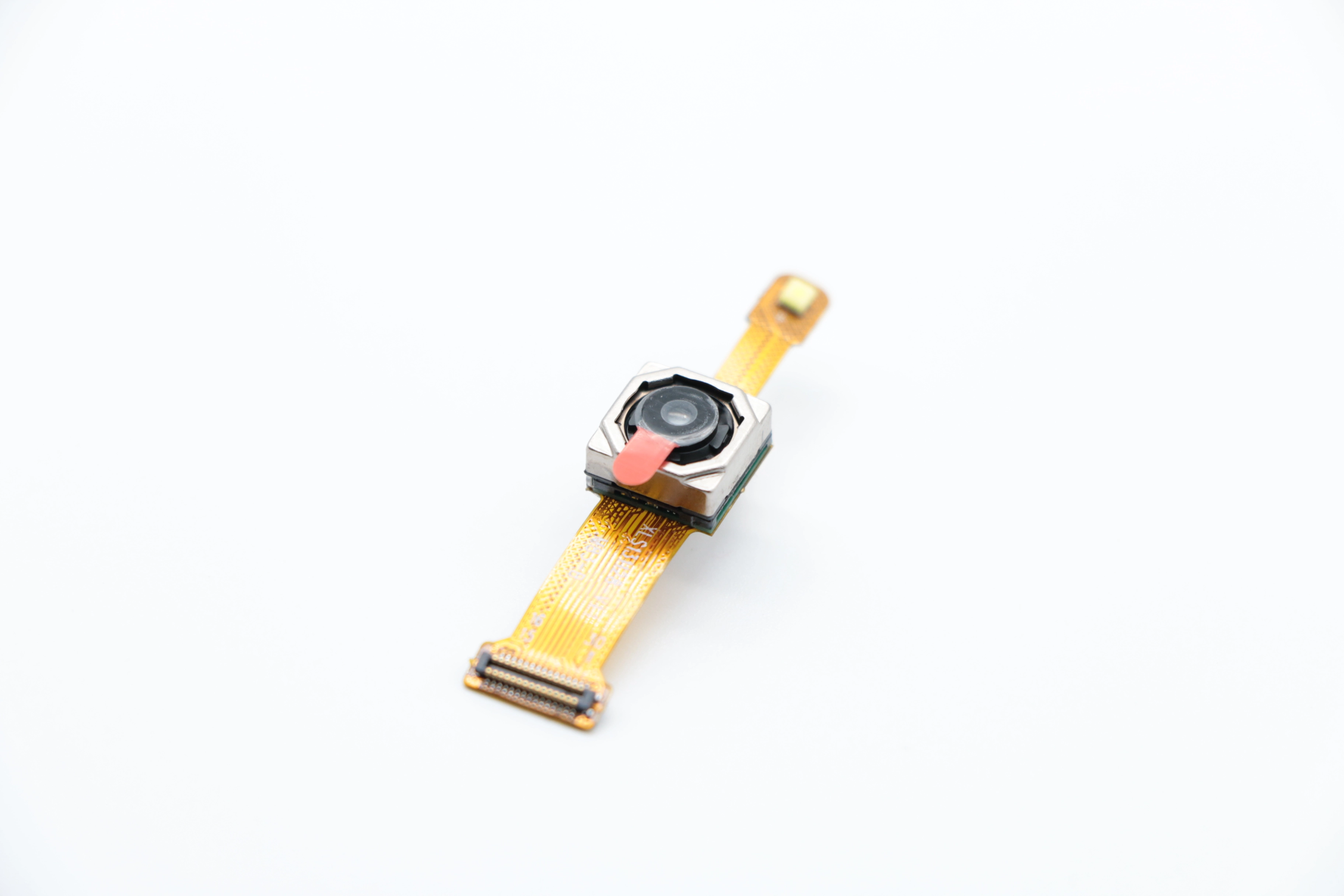
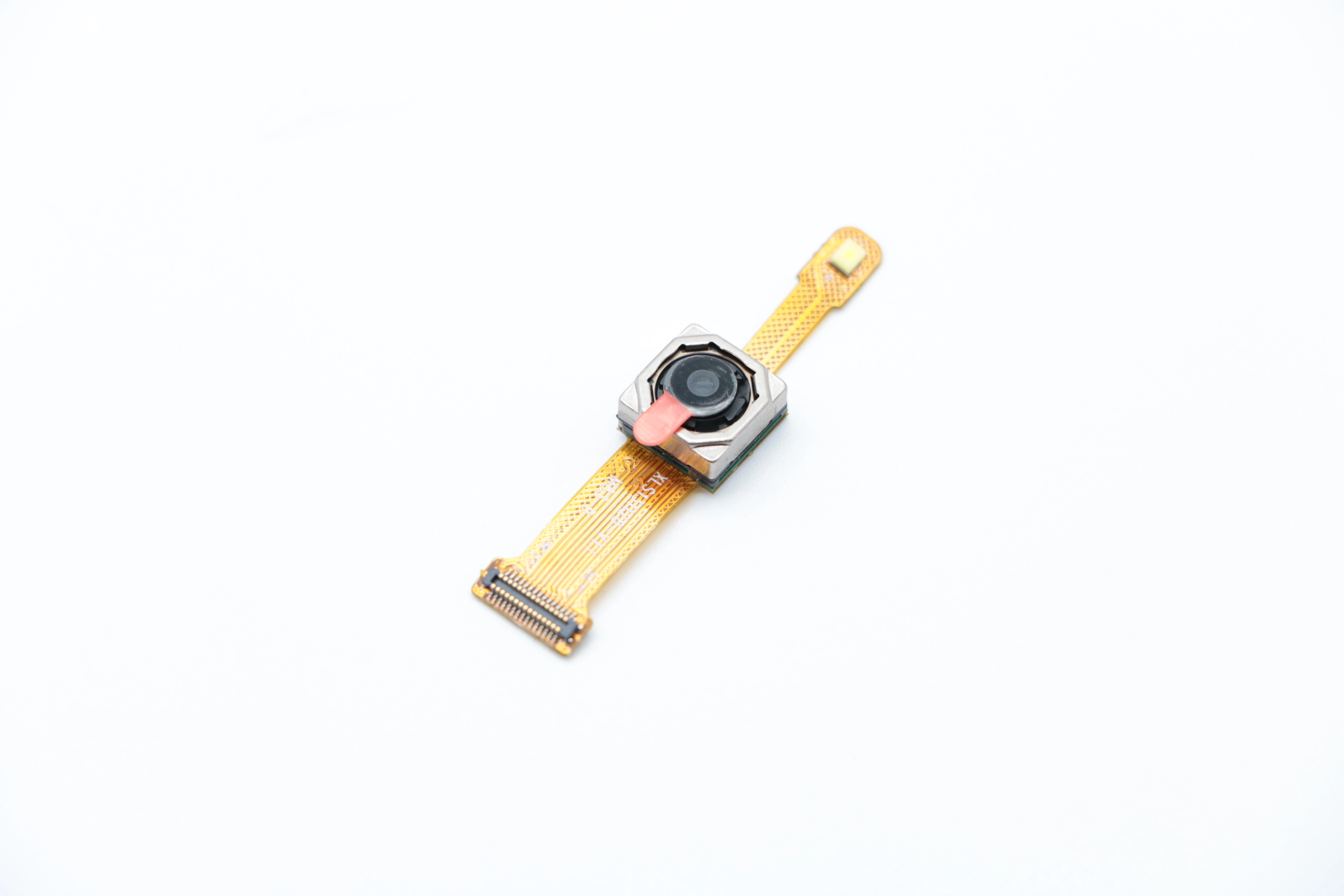
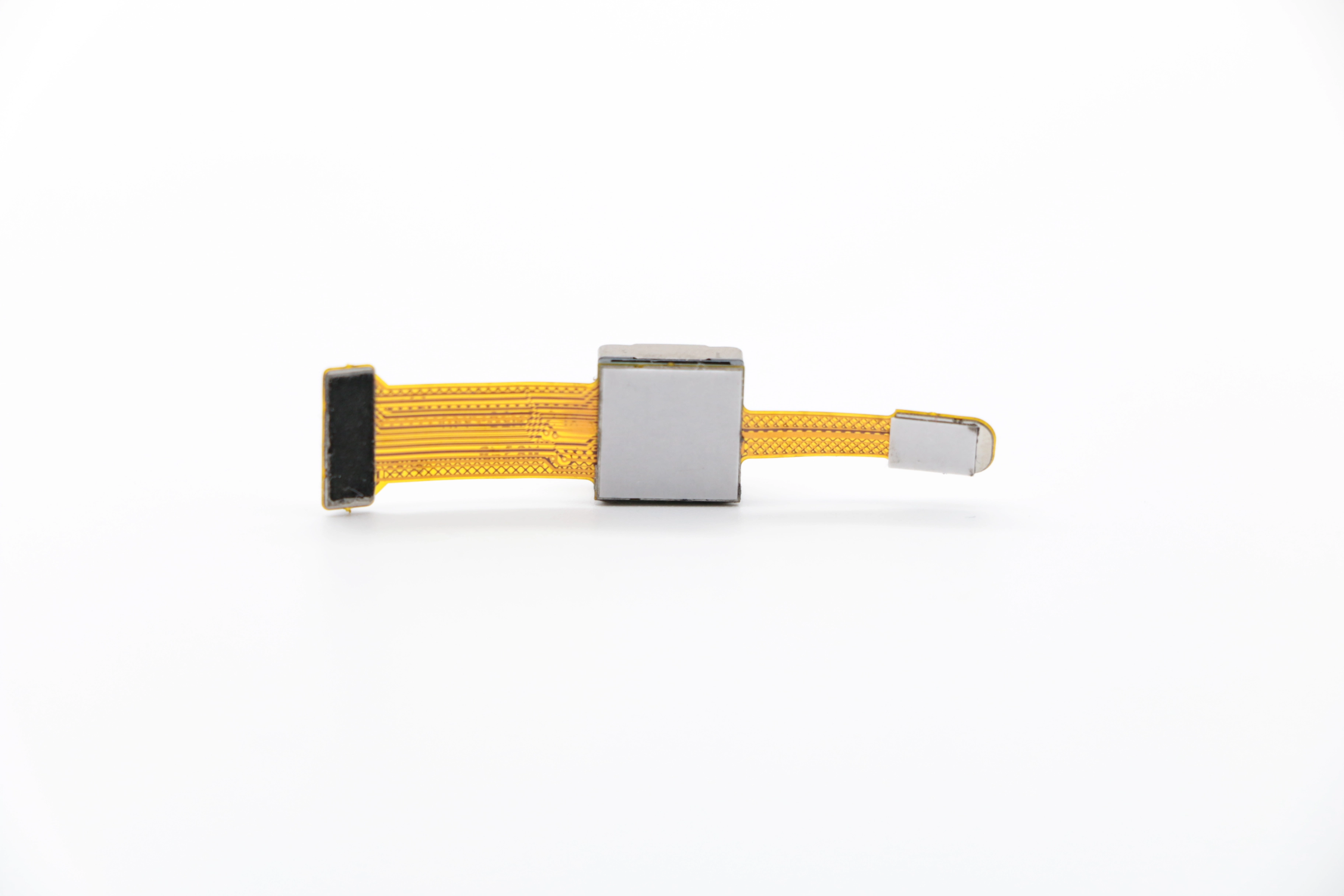
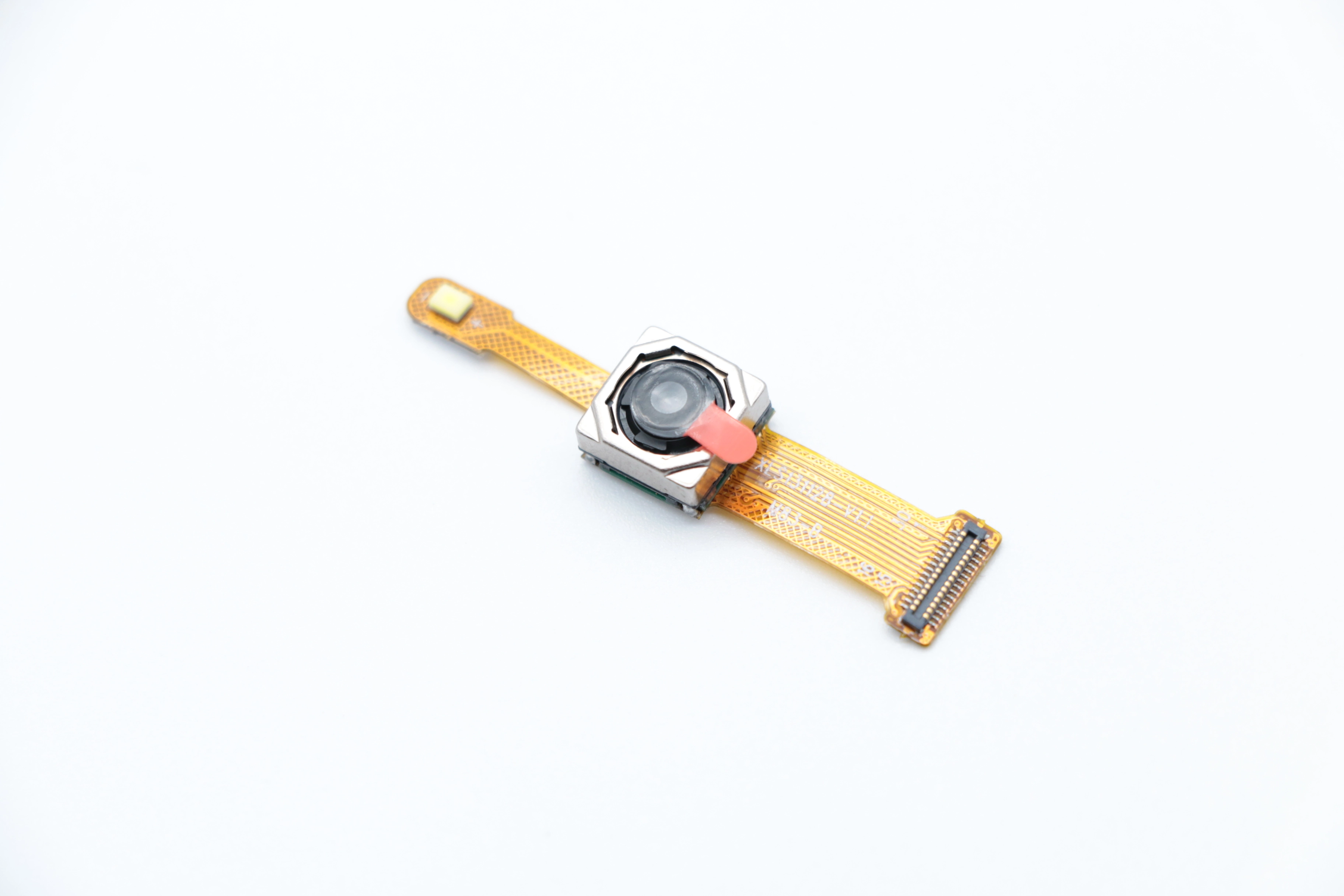
Performance Parameter of 48MP MIPI CSI2 Camera Module
Model | CK-586-V2.0 | REMARKS |
Image Sensor | IMX586 |
|
Image Sensor Size | 1/2 |
|
Effective Pixels | 8000*6000 |
|
Pixel size | 0.8μm x 0.8μm |
|
Optical distortion | ≤-1.2% |
|
Image sensor Data output | Output video format of RAW10/8, COMP8 |
|
Maximum Frame Rates and Resolution | 30fps@Full resolution (QBC Re-mosaic) 30fps@QBC-HDR 120fps@2x2 Adjacent Pixel Binning (16:9) 240fps@2x2 Adjacent Pixel Binning V2H2(16:9) |
|
SNR max | 42dB |
|
Dynamic range | 74dB |
|
Min. Illumination | ≥0.1LUX at F.No2.2 | NO LED |
Interface | D-PHY 2lane/4lane Max. 2.5Gbps/lane, (D-PHY spec. ver. 1.2 compliant) MIPI C-PHY 1/2/3trio, Max 2.5Gsps/Trio, (C-PHY spec ver. 1.0 compliant) |
|
Power requirements | IOVDD: 1.8V AVDD1: 2.9V; AVDD2: 1.8V DVDD: 1.1V |
|
Storage temperature | -40℃ to 105℃ |
|
operating temperature | -30℃ to 85℃ |
|
Power Consumption | Max 600mW |
|
LED IR-850 | NO, but could be customized |
|
OS | Linux Android |
|
Lens size | M6 diameter;3.79mm TTL |
|
Lens Construction | 5P+IR |
|
F/NO | 2.0 |
|
EFL | 2.46mm |
|
FOV | D:87° H:73° V:57° ±3° |
|
Shooting distance | Auto Focus, 5cm-infinity |
|
48MP Full Resolution vs 12MP Pixel Binning
| Mode | Main Advantage | Main Trade-off | Suitable Applications |
| 48MP remosaic | Maximum visible detail | High bandwidth and ISP load | Document capture, digital microscopy, static detail inspection |
| 12MP 2×2 binning | Higher sensitivity and lower data volume | Lower final resolution | Low-light imaging, real-time preview, embedded AI |
| HDR mode | Better highlight and shadow retention | Requires compatible ISP and tuning | Mixed-light embedded imaging |
| High-speed mode | Higher frame rate | Lower output resolution or cropped area | Motion analysis and responsive preview |
A 48MP sensor does not guarantee that every application should operate continuously at 48MP. The best output mode depends on lighting, available CSI bandwidth, ISP processing capacity, memory bandwidth and required frame rate.
MIPI CSI-2 Integration Requirements
| Integration Item | Requirement |
| MIPI receiver | Compatible CSI-2 D-PHY or C-PHY configuration |
| Lane configuration | Must match the camera module and host processor |
| Sensor clock | Confirm input clock frequency and tolerance |
| Power sequence | IOVDD, AVDD and DVDD sequencing must follow design requirements |
| Sensor driver | Register initialization, stream control and mode tables |
| Device tree | Clock, GPIO, regulators, reset and endpoint configuration |
| ISP | Demosaic, exposure, AWB, color, noise reduction and sharpening |
| Autofocus | VCM driver and focus-control algorithm |
| Memory bandwidth | Must support selected resolution, bit depth and frame rate |
| Image validation | Required on the final processor, lens and lighting setup |
This module cannot connect directly to a computer’s USB port. A USB bridge or UVC controller would be required to convert the MIPI RAW stream into a USB camera output.
48MP IMX586 MIPI Camera Module FAQs
Is the IMX586 48MP camera module a USB camera?
No. This product is a MIPI CSI-2 camera module that outputs RAW image data to a compatible processor. It cannot connect directly to a computer through a standard USB port.
To convert the IMX586 sensor output into a UVC USB camera signal, the complete system would require a compatible USB bridge or image processor, UVC firmware and sufficient bandwidth for the selected resolution and frame rate.
Does the 48MP MIPI camera module require a sensor driver?
Yes. The host platform normally requires an IMX586 sensor driver, power-sequence configuration, MIPI CSI-2 receiver setup, clock configuration and ISP integration.
The exact driver requirements depend on the processor model, operating system, kernel or Android version, MIPI lane configuration and board design. CK Vision can evaluate driver support after reviewing the customer’s hardware platform and BSP information.
Can the IMX586 camera module output 48MP at 30 fps?
The achievable full-resolution frame rate depends on the selected sensor mode, RAW bit depth, MIPI PHY configuration, lane number, lane speed, host CSI receiver, ISP capacity and memory bandwidth.
A 48MP output mode should therefore be verified on the target processor before production. Customers should provide the required resolution, frame rate, RAW format and processor platform for compatibility evaluation.
What is the difference between 48MP mode and 12MP pixel-binning mode?
The 48MP mode is intended for applications that require maximum image detail, digital cropping or high-resolution still-image capture. It also requires significantly more MIPI bandwidth, ISP processing capacity and memory bandwidth.
The 12MP pixel-binning mode combines neighboring pixels to reduce the output resolution and data volume. This mode can provide better sensitivity and is often more suitable for real-time preview, embedded AI devices and imaging under less favorable lighting conditions.
Does the standard 48MP camera module include LED illumination?
No. LED illumination is not included in the standard CK-586-V2.0 configuration.
Visible-light or infrared LEDs can be evaluated as an optional customization. The final design depends on the available installation space, required wavelength, illumination distance, power supply, heat dissipation and enclosure structure.
Can the FPC, connector and MIPI pinout be customized?
Yes. CK Vision can evaluate customization of the FPC or PCB outline, connector type, connector position, cable direction, mounting points and pin definition.
MIPI lane configuration and pinout changes must be reviewed together with the IMX586 sensor requirements and the customer’s processor board. Customers should provide the host-board schematic, connector definition and mechanical drawing when requesting a custom design.
Does the module support autofocus?
The standard configuration uses an autofocus lens and can be evaluated for imaging from approximately 5 cm to infinity. Actual autofocus performance depends on the lens, VCM, driver IC, host control interface, focus algorithm, lighting and target contrast.
A compatible VCM driver and autofocus-control method are required on the host platform. Fixed-focus and application-specific focus configurations can also be evaluated.
Which processor platforms can support the IMX586 camera module?
The processor must provide a compatible MIPI CSI-2 receiver, sufficient lane bandwidth, an IMX586 sensor driver and an ISP capable of processing the selected RAW output.
Compatibility cannot be determined only by the operating system. CK Vision needs the processor model, BSP or kernel version, MIPI lane configuration, input clock, required resolution and frame rate to evaluate Linux or Android integration.
What information is required to request a custom IMX586 camera sample?
Please provide the following project information:
Processor or SoC model
Operating system and BSP or kernel version
MIPI D-PHY or C-PHY configuration
Required lane number and connector pinout
Required resolution, frame rate and RAW format
Enclosure and FPC mechanical drawings
Required lens FOV and focus distance
Autofocus or fixed-focus requirement
LED or IR illumination requirement
Prototype quantity and estimated production demand
CK Vision’s engineering team will review the optical, mechanical, electrical, driver and ISP requirements before recommending a sample configuration.